
Bend, Oregon · Family-owned since 2014
Air Conditioning Repair Bend OR
Bend summers are short but hot, and a failed AC turns a house into an oven. Our team fixes air conditioners fast, from a clogged filter to a failed capacitor.
Also searched as: air conditioning repair bend oregon · ac repair bend or · air conditioning repair in Bend.
On every visit
- 1Call or book online
- 2On-site diagnosis — upfront flat-rate pricing
- 3We fix it fast with genuine OEM parts
- 490-day parts and labour guarantee
Mon–Sat 8am–6pm · 56857 Enterprise Dr, Sunriver, OR 97707, USA
Since 2014
Family-owned in Bend
Licensed & insured
Local team, not a call centre
Bend · Redmond
Central Oregon served
Mon–Sat 8am–6pm
Call for a visit
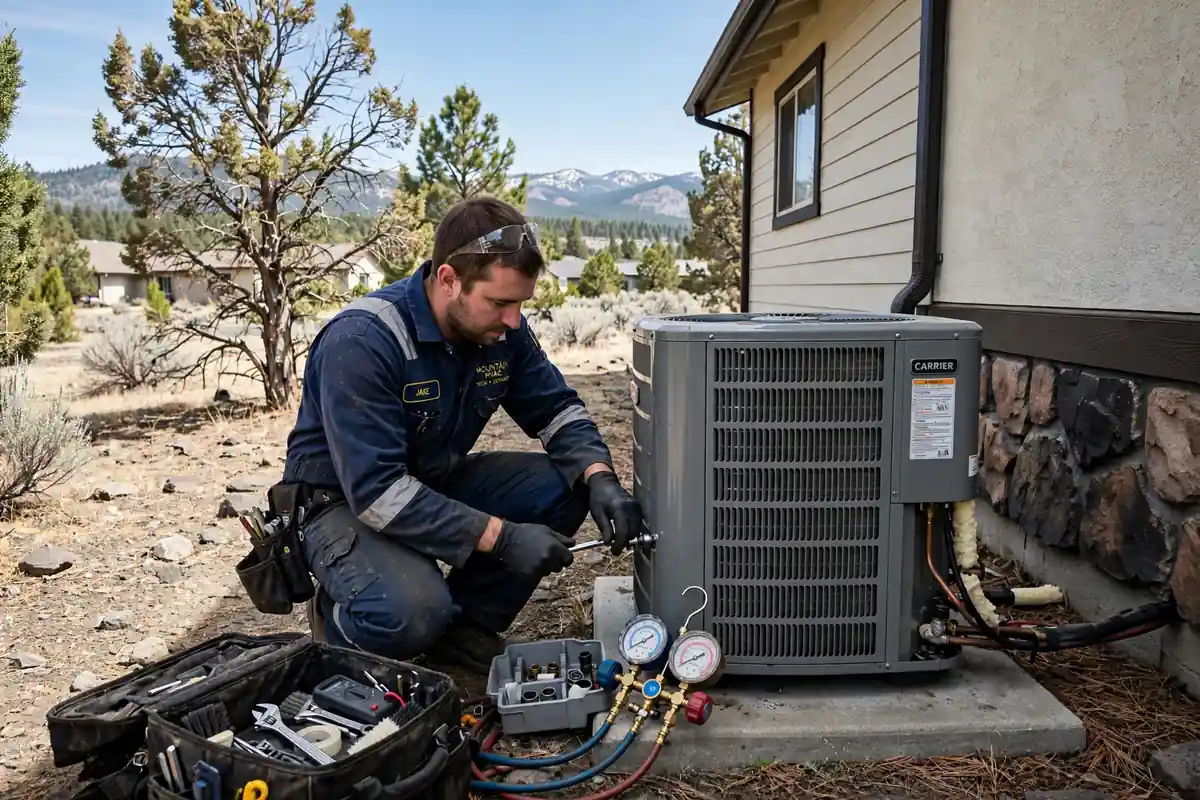
Air conditioning repair Bend OR covers warm air, weak airflow, and short cycling. It also covers strange smells and units that will not start. We work on central AC and ductless systems across Bend, Redmond, and Central Oregon.
Wildfire smoke season adds a Bend-specific fault, because smoke clogs filters fast and strains blowers. We check filters, coils, and airflow with smoke season in mind. We also tell you when a filter change is enough.
What to know before you call
- Air conditioning repair Bend OR often means a new capacitor, coolant flow faults, or thermostat faults after idle winters.
- Most air conditioners serve Bend households twelve to fifteen years, although seasonal stop-start operation accelerates capacitor deterioration and wear.
- Capacitors deteriorate during idle months, then fail dramatically on the first hot day, leaving the compressor humming without starting.
- Refrigerant leaks reduce cooling capacity, while condensation build-up around evaporator coils promotes corrosion and encourages mould contamination inside ductwork.
- Our family-owned team has served Bend, Redmond, and Central Oregon since 2014. Call (541) 422-4646, Monday through Saturday, 8am to 6pm.
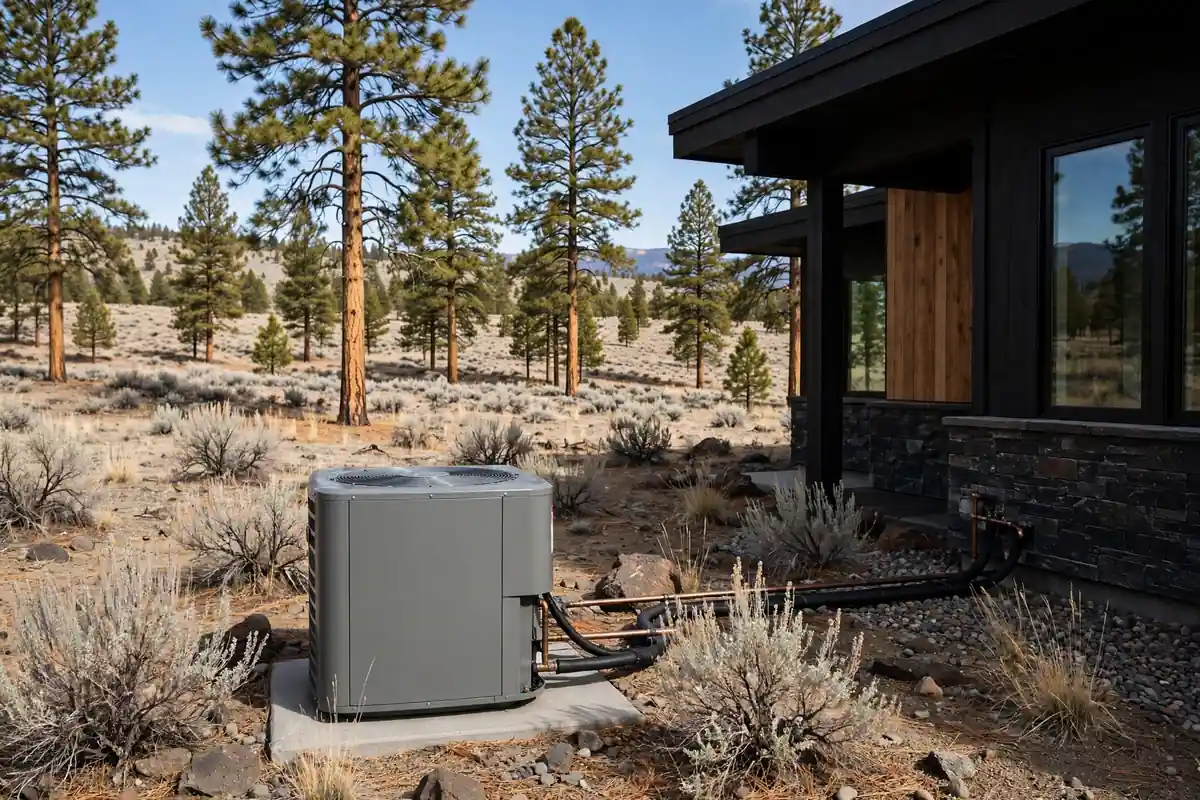
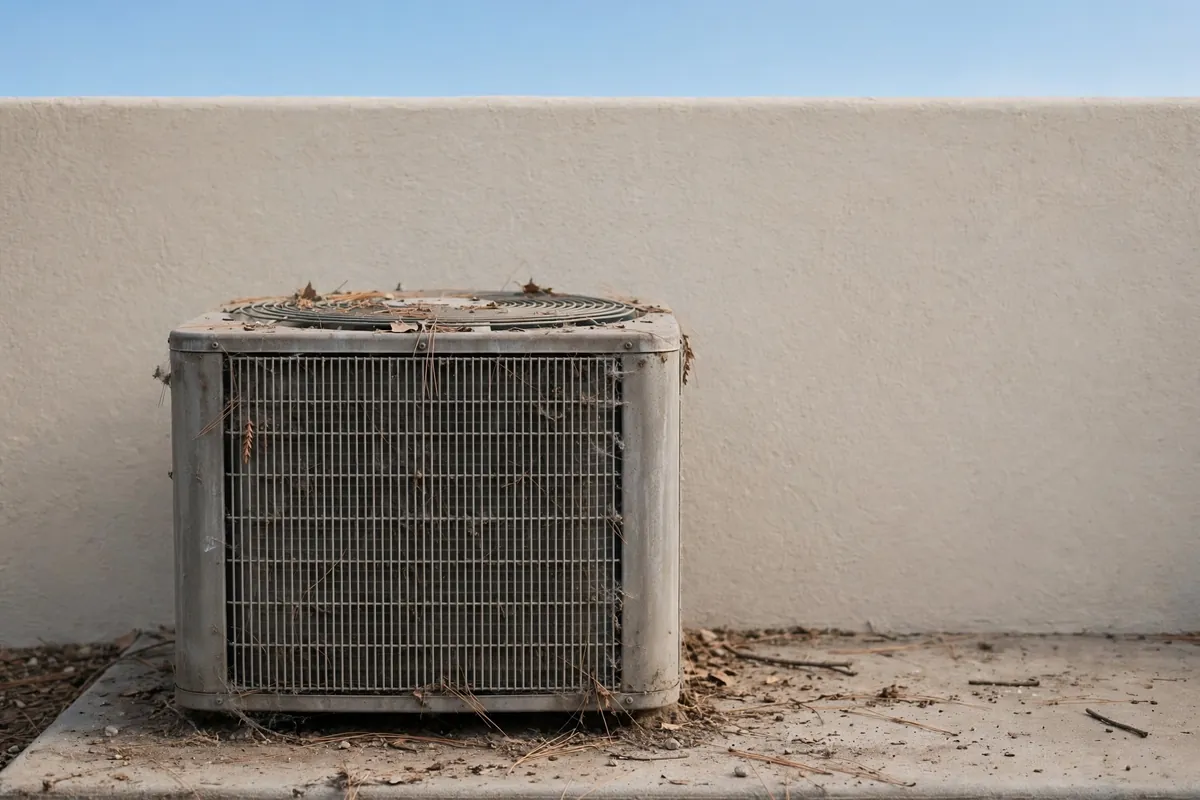
Bend sits at high elevation in the high desert, with hot days and cool nights. Many homes run AC hard in July and August, then sit idle all winter. That stop-start pattern wears capacitors and dries out seals, while dust from the desert coats outdoor coils. We check capacitors, coils, and filters with Bend's seasons in mind.
Air conditioning repair Bend OR begins with understanding how hard cooling systems work during short, intense Central Oregon summers. The compressor circulates refrigerant through condenser and evaporator coils, while the thermostat regulates temperature and the blower moves air. Dust accumulation, low refrigerant, and electrical faults reduce cooling efficiency, forcing components to run longer and use more energy. A professional diagnostic check identifies circulation blocks, calibration errors, and mechanical wear before minor faults become expensive compressor replacements. Central systems and ductless installations each demand specialised diagnostic knowledge, because their refrigeration cycles, ventilation arrangements, and controls differ.
01 — Symptoms
Signs your air conditioner needs attention
These are the faults we see most often in Bend homes, and every one has a clear cause. Each fault also has a safe next step, and we explain both below. If your symptom is not listed, call and describe it, because the cause is usually one of these.
Why is my AC blowing warm air?
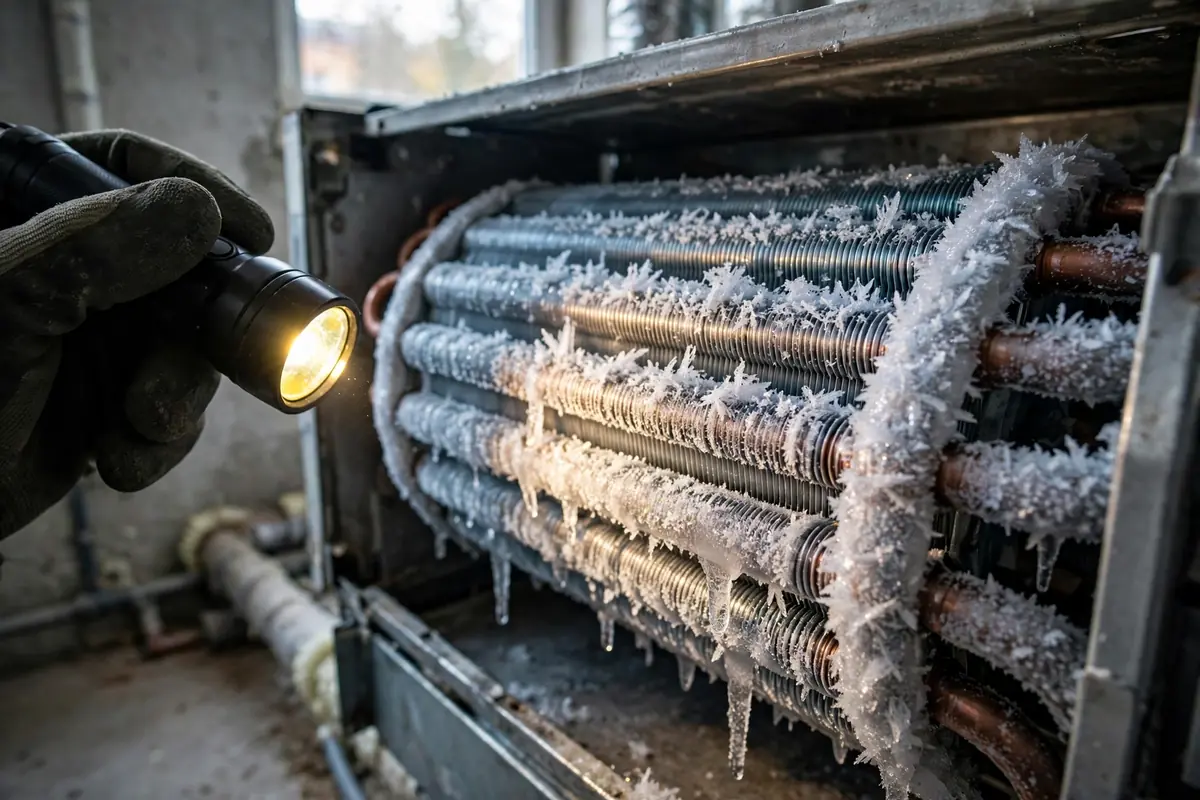
Warm air often means a clogged filter, a failed capacitor, or low refrigerant. The filter is the first check, because a dirty filter blocks airflow and freezes the coil.
Change the filter and check the outdoor unit for dust and debris. If the air stays warm, switch the unit off, because the capacitor or refrigerant needs testing by a technician. Refrigerant work needs a licensed technician and proper tools.
Why won't my AC turn on?
An AC that will not start may have a tripped breaker, a faulty thermostat, or a failed capacitor. Start with the simple checks, because they fix many no-start calls.
Check the breaker and the thermostat batteries, then set the thermostat to cool and five degrees below room temperature. If the unit still will not start, the capacitor or contactor needs testing, and we test both.
Why is my AC airflow weak?
Weak airflow usually means a dirty filter, a frozen coil, or a worn blower motor. Smoke season makes filters clog faster in Bend, so airflow drops sooner.
Change the filter first and check that all vents are open. If airflow stays weak, switch the unit off and let any ice melt. We test the blower, the coil, and the ducts on the visit.
Why does my AC turn on and off constantly?
Short cycling means the unit starts, stops, and starts again in minutes. The cause is often a dirty filter, a faulty thermostat sensor, or an oversized unit. Short cycling wears the compressor fast over time.
Change the filter and check the thermostat location, because a thermostat in direct sun misreads the room. If cycling continues, switch the unit off and call, and we test the sensor, the capacitor, and the charge.
Why is my AC making a loud banging or rattling noise?
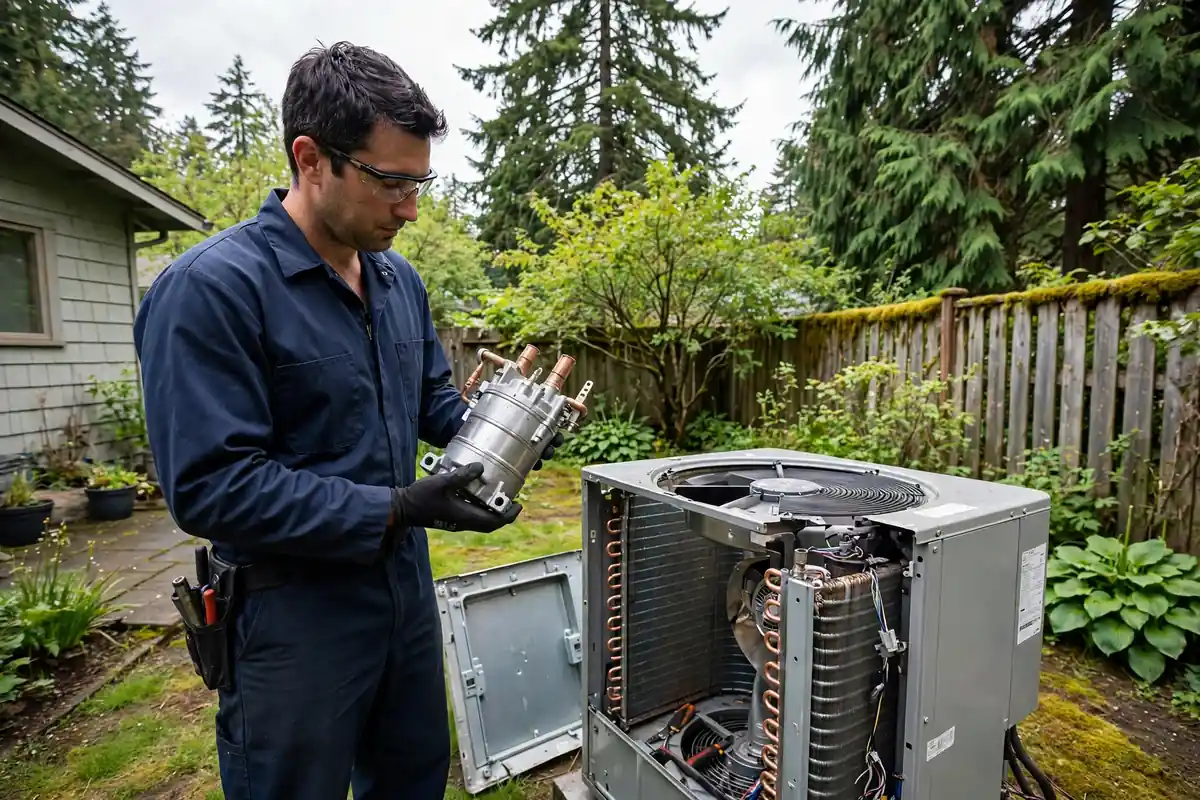
Loud banging usually indicates mechanical deterioration, because loose blower components, unbalanced fan blades, or failing compressor mountings create vibration. Rattling often comes from bits inside the condenser, where desert dust and gravel block fan spin and airflow. Leaving odd noises risks total compressor failure, because shaking speeds wear on wires, coolant lines, and mounts.
Switch the system off, then check the condenser for bits, loose panels, or bent blades before calling for help. Never run a noisy system, because wear gets worse fast and turns a small fix into a new compressor. Our technician performs a diagnostic inspection, tightening connections, balancing fan components, and replacing deteriorated mountings to restore efficient operation.
Why is water leaking from my AC unit?
Water leakage usually indicates condensation drainage failure, because algae accumulation, sediment deposits, and debris block the condensate drain line. When the drain fails, water spills from the pan, harming wrap, causing mould, and risking nearby wiring and parts. Frozen indoor coils cause the same fault, as melting ice floods the drain when coolant faults make excess water.
Switch the system off, put towels round the leak, and check the drain for a block or standing water. Never run the system while water pools near electrical connections, because moisture infiltration creates safety hazards and accelerates corrosion. Our tech clears the drain, checks the indoor coil, tests coolant flow, and checks drainage before restarting the unit.
Why are some rooms cooler than others?
Uneven cooling indicates airflow distribution problems, because ductwork deterioration, insulation gaps, and closed vents restrict circulation to distant rooms. Leaking duct connections waste air inside attics and crawl spaces, while inadequate insulation allows summer heat infiltration through walls. An oversized or undersized unit upsets balance, causing fast cycling, poor damp control, and uneven heat.
Check vents stay open, swap filters, and make sure chairs or curtains do not block airflow in warmer rooms. If the upset lasts, testing checks airflow, duct state, and thermostat settings to find the real flow block. Our tech talks through the results, suggests simple fixes, and brings back even cooling through your Bend home.
Table 1 — Symptom, cause, and next step
| Symptom | Possible cause | Next step |
|---|---|---|
| AC blowing warm air | Clogged filter, failed capacitor, or low refrigerant | Change the filter, check the outdoor unit, then call |
| AC will not turn on | Tripped breaker, thermostat, or failed capacitor | Check breaker and thermostat, then book a test |
| Weak airflow from vents | Dirty filter, frozen coil, or worn blower | Change the filter, open vents, then call |
| AC short cycling | Dirty filter, sensor fault, or oversized unit | Change the filter, check thermostat, then call |
02 — Diagnosis
What we check on a air conditioning repair bend or visit
A good diagnosis saves money, so we test parts in order, from the likeliest fault to the least likely. We show you what we found, and these are the parts and terms we check most: compressor, capacitor, refrigerant, evaporator coil, condenser coil, thermostat, blower motor, air filter, condensate drain, contactor.
| Part | Symptom it causes | What we check |
|---|---|---|
| Capacitor | Will not start, humming | Test capacitor, check contactor |
| Air filter | Weak airflow, warm air | Replace filter, check coil for ice |
| Condenser coil | Warm air, high bills | Clean dust, test cooling cycle |
| Thermostat | Wrong temperature, short cycling | Test sensor, check placement |
| Condensate drain | Musty smell, water leak | Clear drain, check pan and coil |
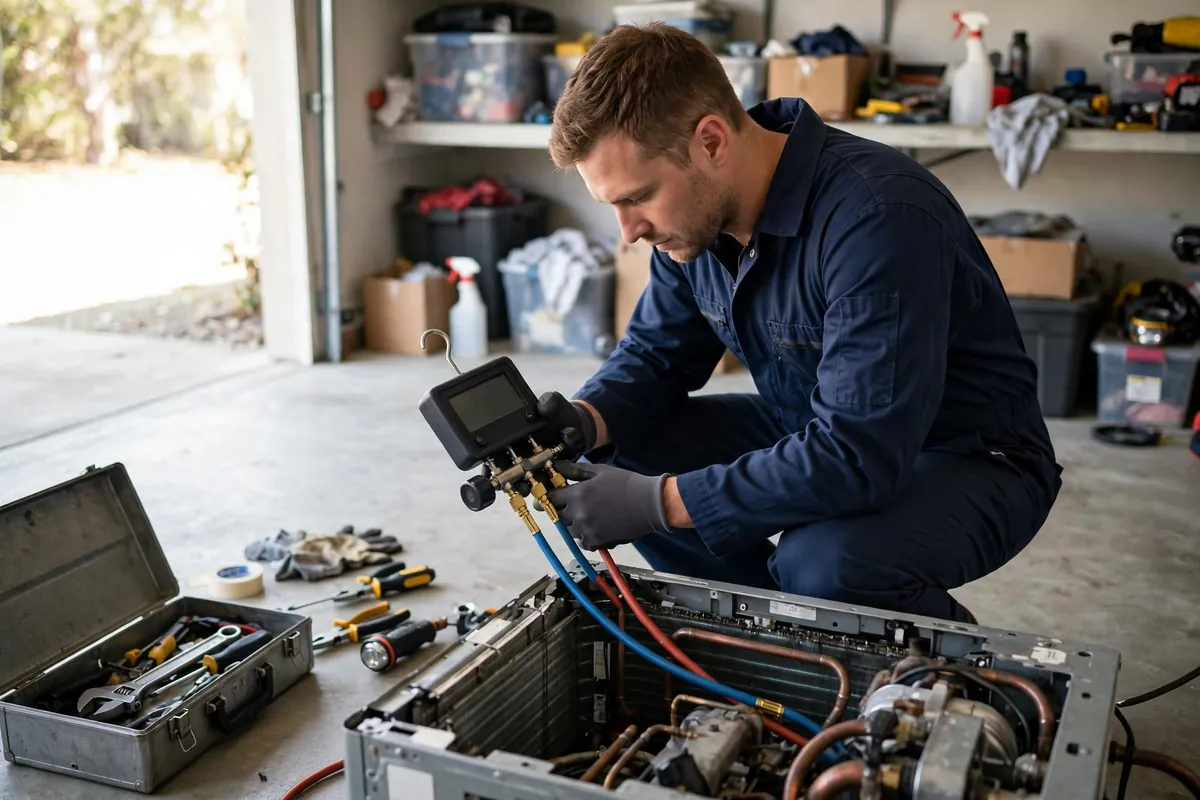
Our diagnostic inspection follows a sequence, measuring refrigerant pressure, electrical performance, and airflow circulation before recommending repair or replacement. An exact check stops needless new parts, guards compressor life, and keeps each bit of advice honest and clear.
| Component | Typical lifespan | When it fails |
|---|---|---|
| Capacitor | 5–10 years | Humming, will not start |
| Compressor | 12–15 years | Warm air, loud noise |
| Blower motor | 10–15 years | Weak airflow, rattling |
03 — Repair or replace
Repair or replace? An honest answer for air conditioner owners in Bend
We use the 50% Rule. If the repair costs more than half of a new air conditioner, replacement usually makes more sense. If it costs far less, repair usually wins, and age matters too. Small parts on young machines are almost always worth fixing, while major faults on old machines rarely are. For air conditioning repair bend or, we give you the quote and your machine's age, then decide together.
Interactive tool — the 50% Rule
Repair or replace? Check in 10 seconds.
Type the numbers from your quote. If the repair costs more than half of a new unit, replacement usually makes more sense.
Repair is 28% of replacement cost.
Repair usually wins. The fix costs less than half of a new unit, and the appliance has life left.
This is a guide, not a quote. A technician confirms the fault and the real price on the visit.
| Situation | Repair cost | Our honest advice |
|---|---|---|
| Under 10 years, capacitor or filter | Less than half the cost of new | Repair — usually the smart choice |
| 10–15 years, compressor or coil | Near half the cost of new | Get a quote first, then decide |
| Over 15 years, major failure | More than half the cost of new | Replace — put money into a new unit |
| Any age, filter or drain | A small repair | Repair — fast and worth it |
04 — Your visit
How a visit works
1
Call or book online
Call or book online and describe the fault so we bring the right parts.
2
On-site diagnosis
We diagnose on site and give you upfront flat-rate pricing.
3
We fix it fast
Same-day service where possible, with genuine OEM parts fitted by a local technician.
4
90-day guarantee
Every repair carries a 90-day parts and labour guarantee, and we test a full cycle before we leave.
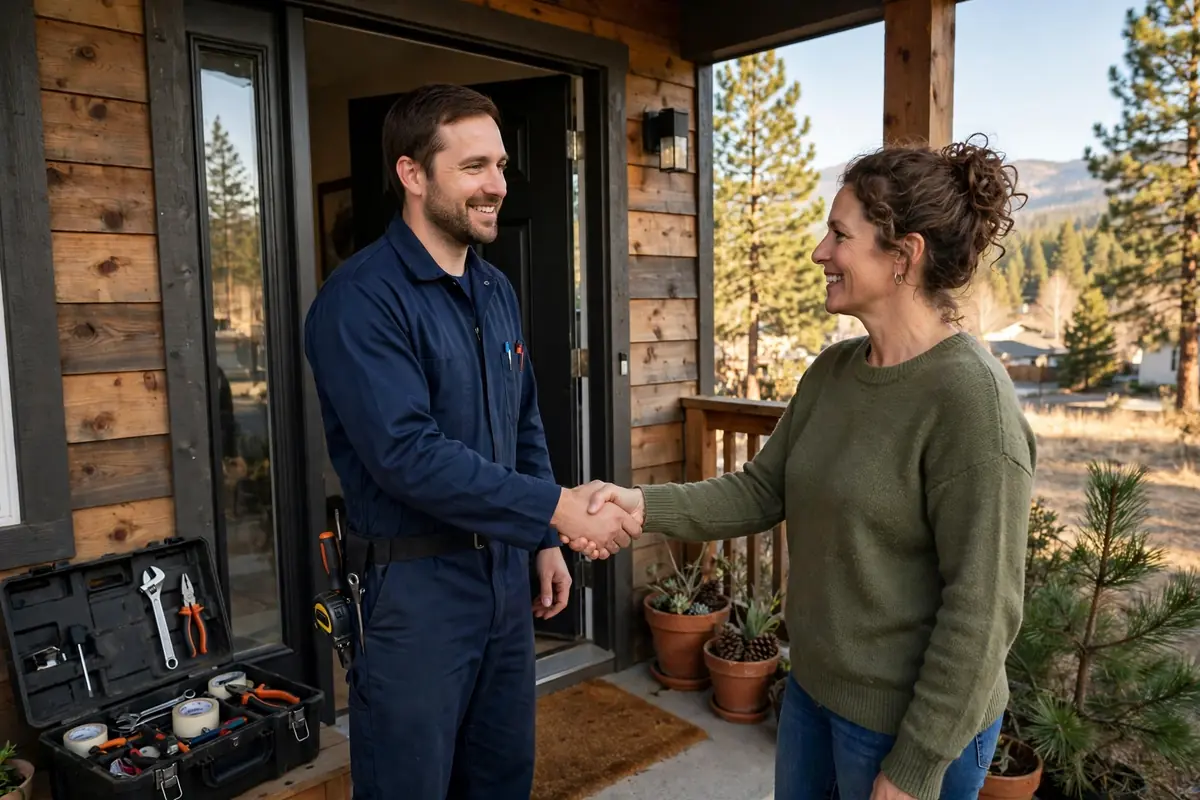
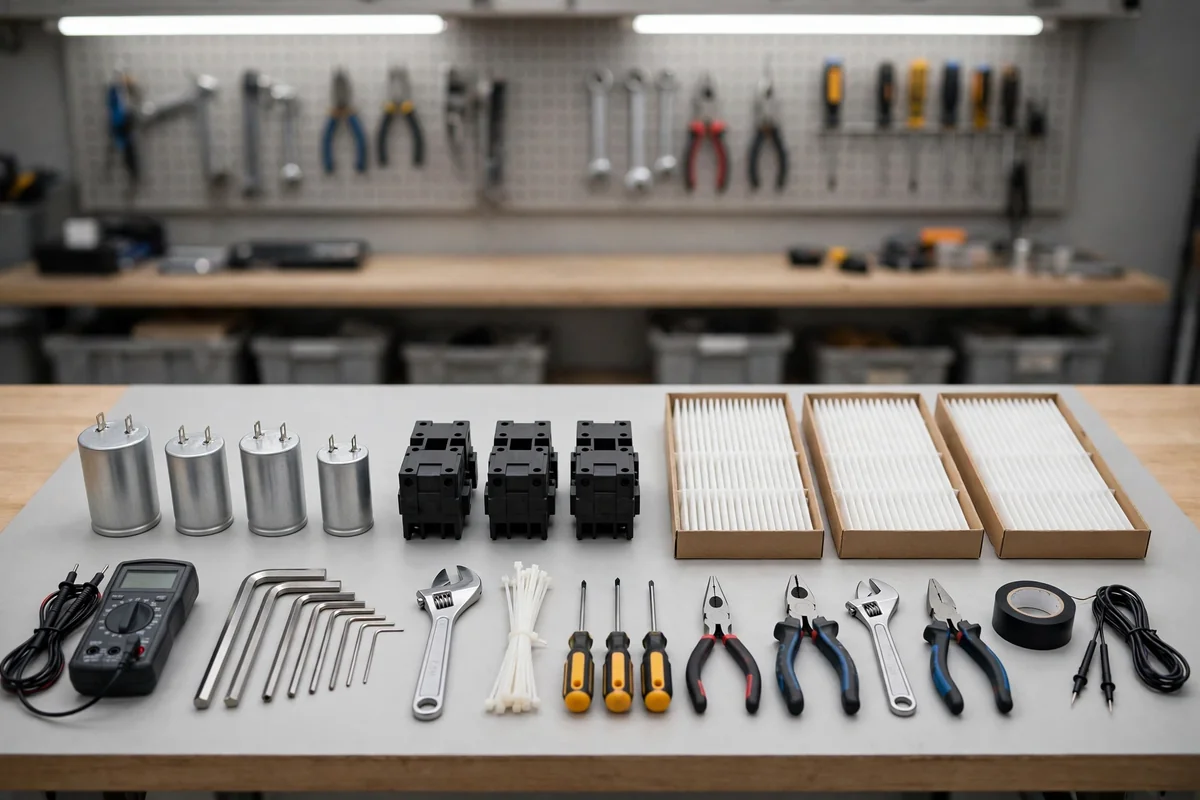
Air conditioning repair Bend OR visits begin with diagnostic inspection, testing the capacitor, compressor, refrigerant levels, and thermostat calibration. The technician inspects the condenser and coils for dust, examines wiring for corrosion, and tests airflow at each vent. Common replacement components, including capacitors, contactors, and filters, are carried on the vehicle for immediate installation during the visit. After diagnosis, you receive a quote: capacitor repair costs $75 to $300, while compressor replacement costs $1,200 to $2,500. The technician tests cooling performance, temperature regulation, and airflow circulation before completing the visit and explaining the warranty.
If recharging is necessary, the technician first locates the leak, because topping up without fixing the source wastes money. Refrigerant work requires licensed handling and specialised equipment, so our technicians follow strict environmental regulations and safety procedures throughout. We apply the 50% Rule: if repair costs exceed half the replacement price, a new unit offers better value. Your quote covers parts and labour, payment is straightforward, and a 90-day parts and labour warranty protects every repair. After the repair, the technician replaces the filter, cleans coils, and verifies temperature regulation across every room before leaving.
05 — Choose well
How to choose a air conditioning repair bend or team in Bend
- Ask what the diagnosis found, in plain words, before you agree to any work.
- Ask for the quote before any work starts, so you know the full cost upfront.
- Ask if the repair is worth it for the age of the unit, or if replacement makes more sense.
- Check they change the filter and test airflow after the fix, not just recharge the system.
- Check they are local to Bend, not a distant call centre, so the technician knows the area.
- Ask whether the technician tests refrigerant pressure and airflow circulation, not simply recharges the system and leaves.
- Check that the team inspects filters, coils, and condensate drainage thoroughly before recommending any expensive component replacement.
06 — Bend climate
Bend's high-desert climate and your air conditioner
Bend's high-desert climate is hard on AC, because summer heat pushes units hard and dust coats outdoor coils. Wildfire smoke clogs filters in days. Winter cold sits idle for months, then capacitors fail on the first hot day. We check filters, coils, and capacitors with all four seasons in mind. New AC units must meet federal efficiency standards that keep getting stricter.
Seasonal stresses to watch for
- Air conditioning repair Bend OR considers winter inactivity, because idle systems suffer stiffened seals, drained capacitors, and corrosion.
- Vacation homes face risks, because unoccupied properties accumulate dust, develop condensation, and suffer undetected refrigerant deterioration between seasonal visits.
- Hard water contributes mineral sediment accumulation inside condensate drains, gradually restricting drainage and encouraging mould contamination around evaporator coils.
Air conditioning repair Bend OR accounts for high-desert elevation, where intense sunshine and temperature swings challenge cooling systems. Hot days push compressors to capacity, while cool nights cause temperature fluctuations that stress electrical connections and thermostat calibration. Desert dust coats outdoor condenser coils, reducing heat transfer efficiency, restricting ventilation, and forcing the compressor to operate longer. Wildfire smoke clogs filtration rapidly, cutting airflow circulation, freezing evaporator coils, and straining blower motors throughout smoky summer weeks. Checking filters monthly during smoke season protects circulation, preserves cooling efficiency, and prevents expensive compressor deterioration from restricted airflow.
What Bend neighbours say
We collect reviews from real customers after every visit and publish them with their permission. No review appears here until it is real and verified — all stats to be confirmed before going live. The live site describes the business as family-owned since 2014, licensed, insured, and 5-star rated on Google.
07 — FAQs
air conditioning repair bend or — frequently asked questions
Short, direct answers, each starting with the point, so it works for readers and for AI answers too.
A capacitor costs $75–$300 and a compressor costs $1,200–$2,500. Those figures come from the business's own AC page, checked 2026-11-08, and the diagnostic fee is $100–$150. We diagnose the fault first and quote before any work starts.
A clogged filter, failed capacitor, or low refrigerant is the usual cause. Change the filter first, and if the air stays warm, call for a test.
Check it monthly in smoke season, because smoke clogs filters fast. A clogged filter cuts airflow and can freeze the coil, so change it when it looks grey.
For a capacitor or filter, repair is usually worth it. For a compressor or coil fault on a unit over 15 years old, replacement is often better. We use the 50% Rule to help you decide.
Short cycling often means a dirty filter or a faulty thermostat sensor. Change the filter and check the thermostat, and if it continues, call for a test.
No — refrigerant work needs a licensed technician and proper tools. A low charge also means a leak, which needs finding and fixing.
A professional maintenance visit once a year, ideally before summer, keeps refrigeration circulation, electrical connections, and filtration performing efficiently. Filters need checking monthly during wildfire smoke season, because smoke contamination clogs filtration rapidly and restricts airflow circulation. Annual servicing identifies capacitor deterioration, refrigerant leaks, and thermostat calibration errors before they cause compressor failure during a heatwave. Call (541) 422-4646 to schedule maintenance, and our technicians will prepare your system thoroughly for the summer season.
After months of inactivity, capacitors deteriorate, seals stiffen, and refrigerant circulation weakens, leaving the system unprepared for peak demand. Dust accumulation on condenser coils during months reduces heat transfer efficiency, forcing the compressor to work harder from startup. A pre-summer diagnostic inspection identifies these problems, testing capacitor performance, refrigerant pressure, and thermostat calibration before the heat arrives. Same-day service is available where possible, so call early on the first hot day for the fastest diagnostic visit.
We also fix air conditioners across Central Oregon
The same team serves Redmond, Sisters, Sunriver, La Pine, and Bend neighbourhoods, so choose your area for local details.
Other services in Bend
Request a visit
Tell us the appliance and the symptom — we reply with a visit slot.
Need air conditioning repair bend or?
Call (541) 422-4646 — Mon–Sat 8am–6pm. Tell us the fault, and we will book a visit and give you a clear quote before work starts.
Call (541) 422-4646