
Bend, Oregon · Family-owned since 2014
Oven Repair Bend OR
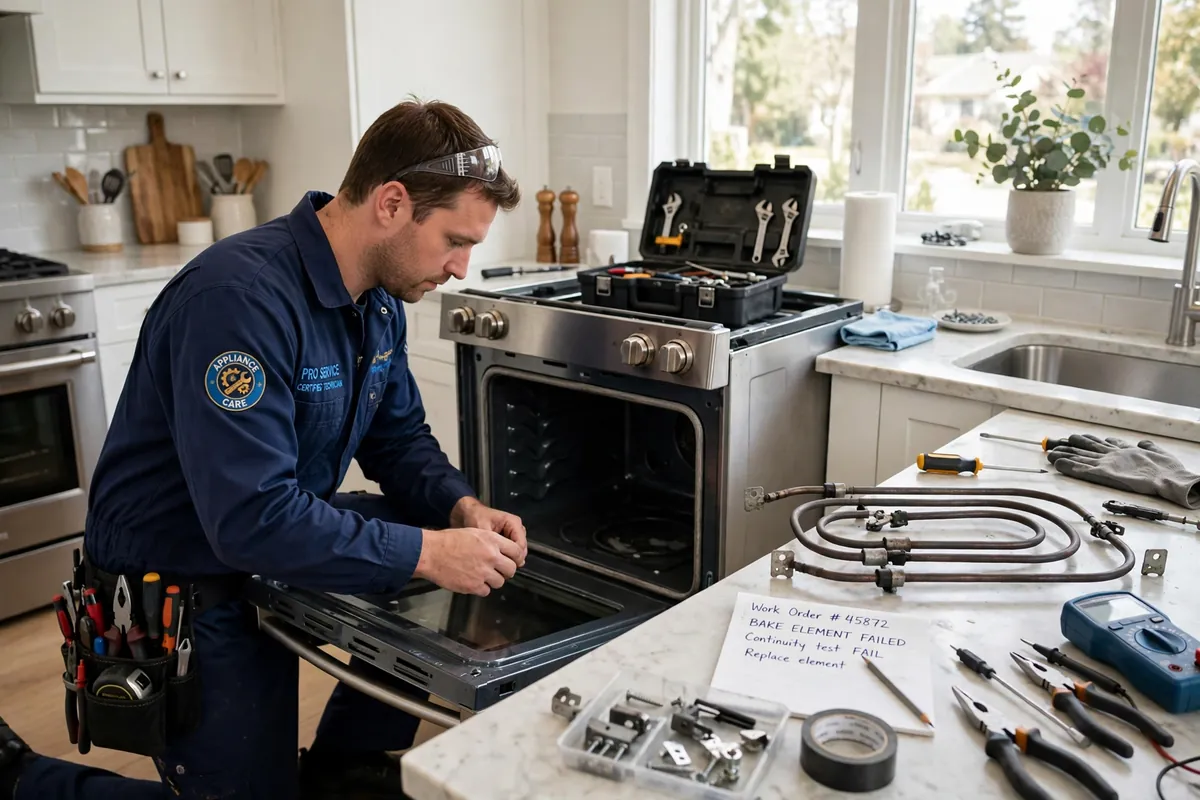
An oven that will not heat ruins dinner plans. A burner that clicks but will not light is just as frustrating. Our Bend team fixes gas and electric ovens and ranges, from a worn igniter to a faulty temperature sensor.
Also searched as: oven repair bend oregon · stove repair bend or · range repair bend or.
On every visit
- 1Call or book online
- 2On-site diagnosis — upfront flat-rate pricing
- 3We fix it fast with genuine OEM parts
- 490-day parts and labour guarantee
Mon–Sat 8am–6pm · 56857 Enterprise Dr, Sunriver, OR 97707, USA
Since 2014
Family-owned in Bend
Licensed & insured
Local team, not a call centre
Bend · Redmond
Central Oregon served
Mon–Sat 8am–6pm
Call for a visit
Oven repair Bend OR covers bake faults, wrong temperatures, slow preheat, and dead burners. We work on stoves, ranges, wall ovens, and cooktops across Bend, Redmond, and Central Oregon.
Gas work needs care, so if you smell gas, leave the house and call the gas company first. For all other oven faults, we test the igniter, the element, and the sensor before we fit any part.
What to know before you call
- Oven repair Bend OR homeowners request most often involves worn igniters, failing bake elements, and sensors losing calibration.
- Most ovens reach middle age after ten years, when repeated thermal cycling gradually degrades elements and electronic controls.
- Holiday cooking accelerates deterioration considerably, while Bend's arid climate hardens rubber door seals and forces heating elements harder.
- Bend homes mix vintage electric ranges, modern gas cooktops, and wall ovens, each demanding different diagnostic techniques and precautions.
- Technicians arrive with testing instruments, igniters, elements, sensors, and burner assemblies. Every repair includes testing to full temperature, verifying ignition, regulation, and even heat distribution.
Bend homes mix old and new cooking, and older homes near downtown often have electric ranges with worn elements. Newer homes in Northwest Crossing and Mountain View often have gas ranges with igniters that wear out. Holiday cooking in Bend's cold months puts ovens under heavy use, and that is when weak igniters fail.
Also covered: Stove, Wall Oven, Cooktop, and Range Hood repairs, with the same diagnosis and warranty.
Oven repair Bend OR households depend on begins with careful diagnostic inspection of ignition, heating elements, and temperature regulation. Modern ovens combine electronic controls, precision sensors, and powerful heating elements to deliver consistent temperatures for baking and roasting. When ignition weakens or a heating element deteriorates, preheating slows, temperatures fluctuate, and familiar recipes suddenly produce disappointing results. An experienced technician identifies these warning signs quickly, isolating the defective component through systematic electrical and thermal testing. Our family-owned team has served Bend, Redmond, and Central Oregon for over a decade, repairing gas and electric ovens.

01 — Symptoms
Signs your oven needs attention
These are the faults we see most often in Bend homes, and every one has a clear cause. Each fault also has a safe next step, and we explain both below. If your symptom is not listed, call and describe it, because the cause is usually one of these.
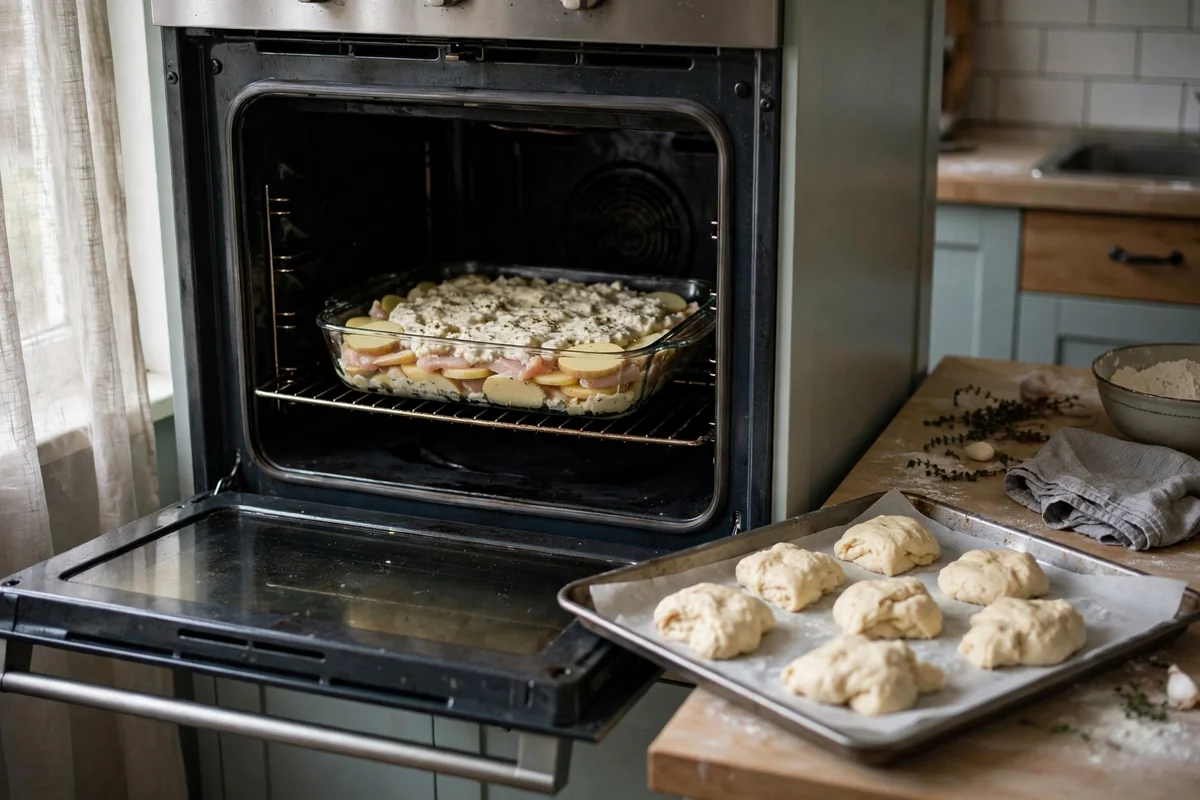
Why is my oven not heating up?
An electric oven that will not heat usually has a failed bake element or a faulty temperature sensor. A gas oven that will not heat usually has a worn igniter. The fix is different for each type, so the diagnosis matters.
For electric, look at the bake element for breaks or blisters, and for gas, watch the igniter glow. If it glows but no flame follows, the igniter is weak. We test the element, the igniter, and the sensor.
Why is my gas oven not heating but the burners work?
This fault points straight at the oven igniter. The burners use a different ignition path, so they can work fine while the oven igniter fails. A weak igniter glows but cannot open the gas valve.
Do not keep trying to light it by hand; switch the oven off instead. Note if the igniter glows orange or stays dark. We test the igniter current and fit the correct part for your model.
Why is my oven temperature wrong?
An oven that runs hot or cold usually has a faulty temperature sensor or a worn door seal. Food burns on one side or stays raw in the middle. Baking fails first, because baking needs steady heat.
Put an oven thermometer inside and compare its reading with the display. If the gap is more than 25 degrees, the sensor or calibration is off. We test the sensor and calibrate or replace it.
Why does my gas stove burner click but not light?
A clicking burner that will not light often has a dirty cap, a wet igniter, or a weak spark. Food spills and cleaning water are the usual causes.
Lift the burner cap and clean it, then dry the igniter fully and check the burner holes are clear. If the burner still clicks with no flame, the igniter or spark module needs testing. We test both parts on the visit.
Why does my oven cook unevenly, burning food on one side?
Uneven cooking usually signals a failing convection fan, a deteriorating door seal, or a bake element heating inconsistently. A deteriorating seal allows heated air to escape, creating cool zones near the door while the rear overheats considerably.
Rotate baking trays midway through cooking, inspect the door seal for gaps, and confirm the convection fan operates audibly. If uneven cooking persists, the temperature sensor, convection fan motor, or bake element probably needs professional diagnostic inspection. Our technician tests heat distribution, verifies temperature regulation, and restores consistent baking performance with targeted component replacement.
Why is my oven door stuck locked after self-cleaning?
A door remaining locked after self-cleaning usually indicates a failed thermal fuse, a jammed lock, or overheated control electronics. Self-cleaning cycles generate extreme temperatures, sometimes exceeding normal operating limits, and prolonged heat exposure stresses locking components considerably. When the oven cools completely, the lock should release automatically, but a defective thermal fuse can prevent resetting.
Allow the oven to cool completely for several hours, then try the door gently without forcing the locking mechanism. Interrupt electrical power at the breaker briefly, restore the supply, and attempt the door release mechanism once more. If the door remains locked, the thermal fuse or locking assembly probably needs professional replacement by a qualified technician.
Why does my electric burner only work on high heat?
An electric burner stuck on high heat almost always indicates a defective infinite switch, the component regulating power delivery. The infinite switch cycles power rapidly, and when its internal contacts deteriorate, the burner receives continuous maximum current. Continued use at maximum heat wastes energy, scorches cookware, and accelerates deterioration of the burner element and surrounding components.
Avoid using the affected burner until repair, since uncontrolled maximum heat creates a genuine safety hazard in the kitchen. Switch the burner off completely and confirm the indicator light extinguishes, then avoid touching the element until it cools. Our technician tests the infinite switch, verifies electrical connections, and replaces the faulty component to restore precise temperature control.
Table 1 — Symptom, cause, and next step
| Symptom | Possible cause | Next step |
|---|---|---|
| Oven not heating up | Failed bake element (electric) or worn igniter (gas) | Check the element or igniter glow, then call |
| Gas oven not heating, burners work | Weak or failed oven igniter | Switch off, note the igniter glow, then call |
| Oven temperature is wrong | Faulty temperature sensor or worn door seal | Test with an oven thermometer, then call |
| Gas burner clicks but will not light | Dirty burner cap or weak spark igniter | Clean and dry the burner, then call if no flame |
02 — Diagnosis
What we check on a oven repair bend or visit
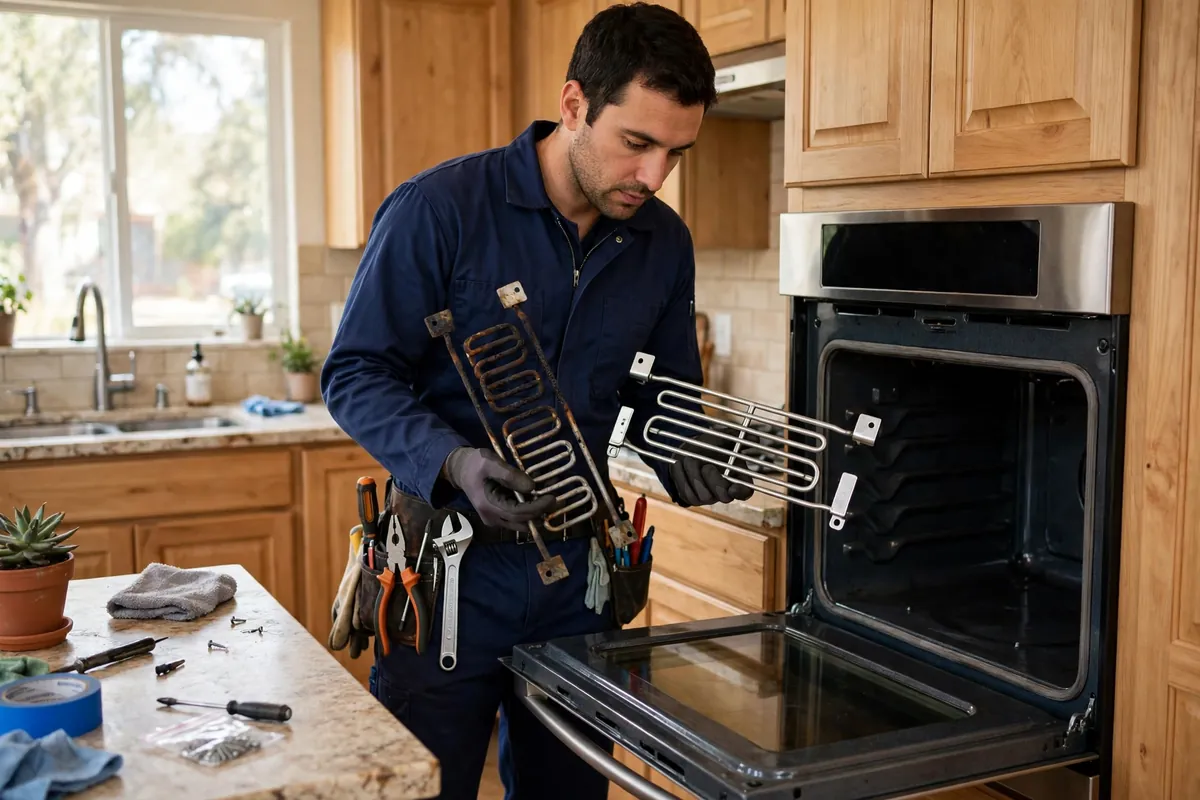
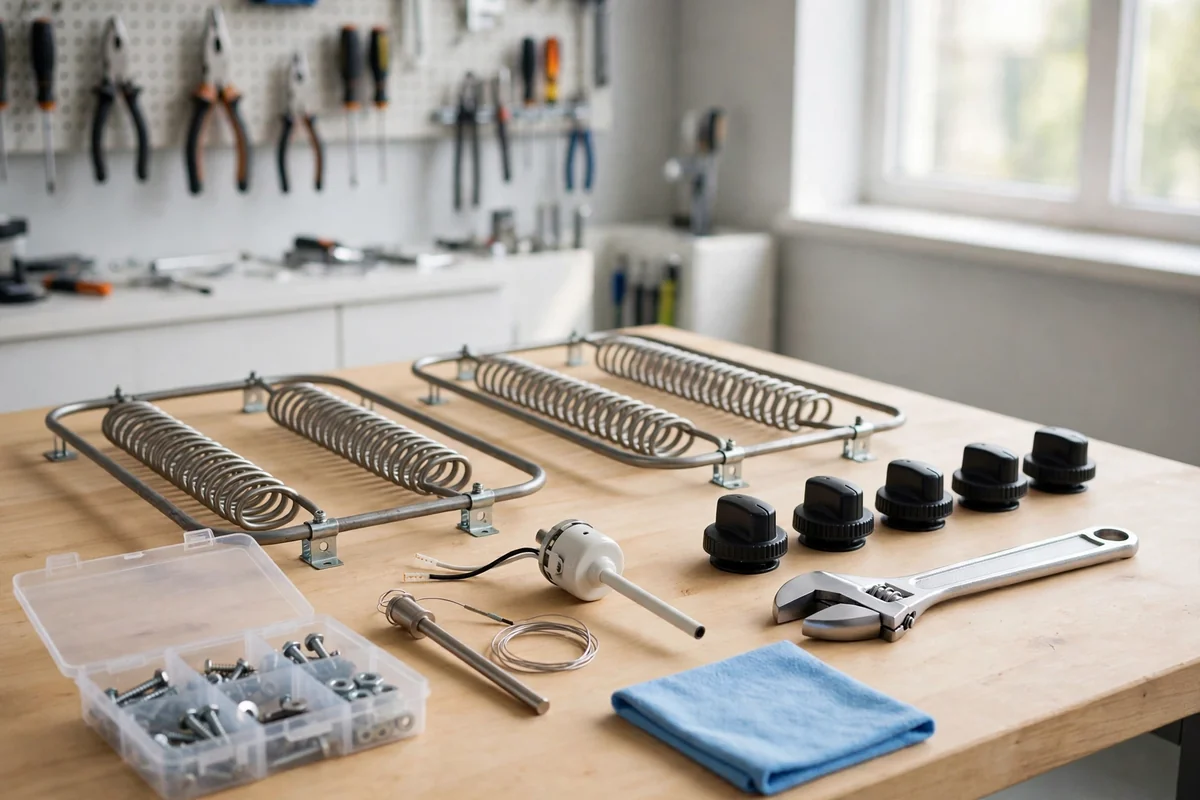
A good diagnosis saves money, so we test parts in order, from the likeliest fault to the least likely. We show you what we found, and these are the parts and terms we check most: bake element, igniter, temperature sensor, control board, burner, gas valve, thermostat, broil element, oven seal, convection fan.
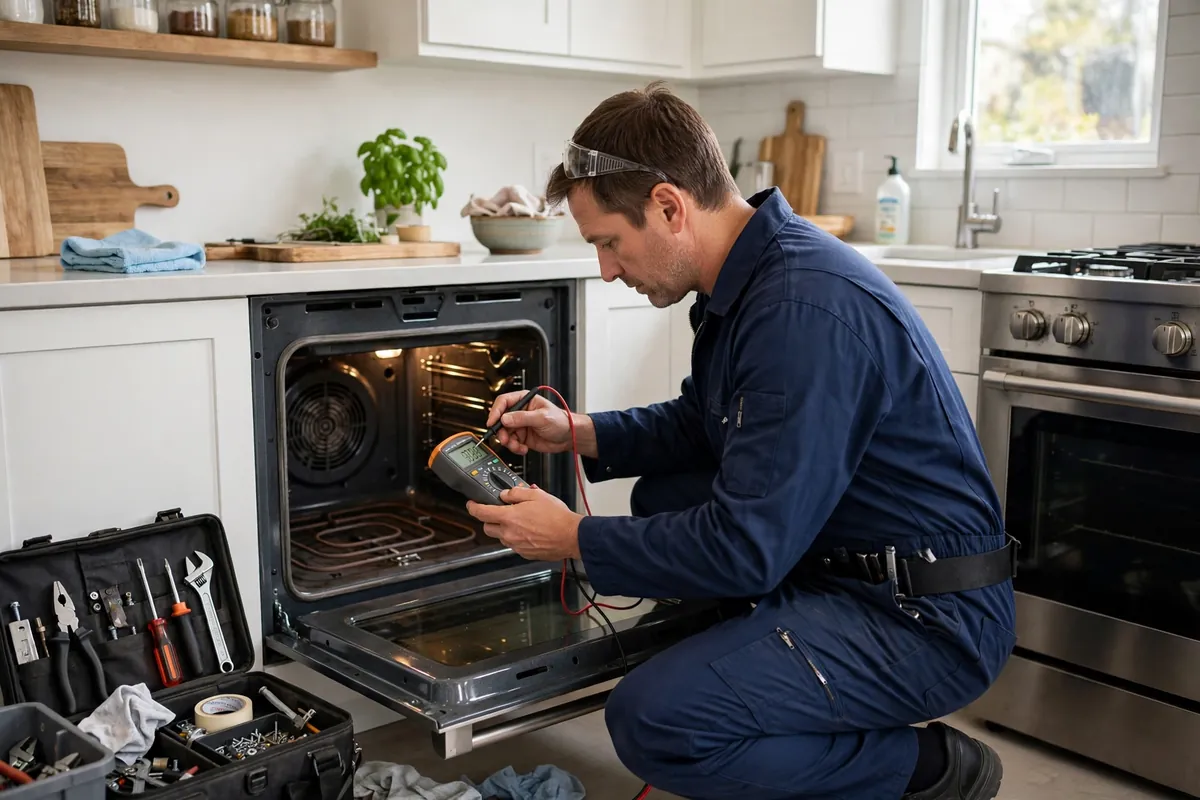
| Part | Symptom it causes | What we check |
|---|---|---|
| Bake element | Electric oven will not heat | Test element, sensor, and control board |
| Igniter | Gas oven will not light | Test igniter current, fit correct part |
| Temperature sensor | Oven runs hot or cold | Test sensor, calibrate oven |
| Burner | Clicks but will not light | Clean cap, test spark module |
| Oven seal | Heat escapes, uneven baking | Inspect seal, replace if flat or torn |
Oven components wear at different rates, and typical lifespans provide useful guidance when weighing repair against replacement. During every diagnostic inspection, our technician evaluates actual component condition, then explains the findings clearly before providing any quotation.
| Component | Typical lifespan | When it fails |
|---|---|---|
| Gas igniter | Ten to twelve years | No heat, weak glow |
| Bake element | Eight to twelve years | No heat, visible damage |
| Temperature sensor | Ten to fifteen years | Wrong temperature, uneven baking |
03 — Repair or replace
Repair or replace? An honest answer for oven owners in Bend
We use the 50% Rule. If the repair costs more than half of a new oven, replacement usually makes more sense. If it costs far less, repair usually wins, and age matters too. Small parts on young machines are almost always worth fixing, while major faults on old machines rarely are. For oven repair bend or, we give you the quote and your machine's age, then decide together.
Interactive tool — the 50% Rule
Repair or replace? Check in 10 seconds.
Type the numbers from your quote. If the repair costs more than half of a new unit, replacement usually makes more sense.
Repair is 28% of replacement cost.
Repair usually wins. The fix costs less than half of a new unit, and the appliance has life left.
This is a guide, not a quote. A technician confirms the fault and the real price on the visit.
| Situation | Repair cost | Our honest advice |
|---|---|---|
| Under 10 years, igniter or element | Less than half the cost of new | Repair — usually the smart choice |
| 10–12 years, sensor or control | Near half the cost of new | Get a quote first, then decide |
| Over 12 years, control or gas valve | More than half the cost of new | Replace — put money into a new unit |
| Any age, burner cap or seal | A small repair | Repair — fast and worth it |
04 — Your visit
How a visit works
1
Call or book online
Call or book online and describe the fault so we bring the right parts.
2
On-site diagnosis
We diagnose on site and give you upfront flat-rate pricing.
3
We fix it fast
Same-day service where possible, with genuine OEM parts fitted by a local technician.
4
90-day guarantee
Every repair carries a 90-day parts and labour guarantee, and we test a full cycle before we leave.
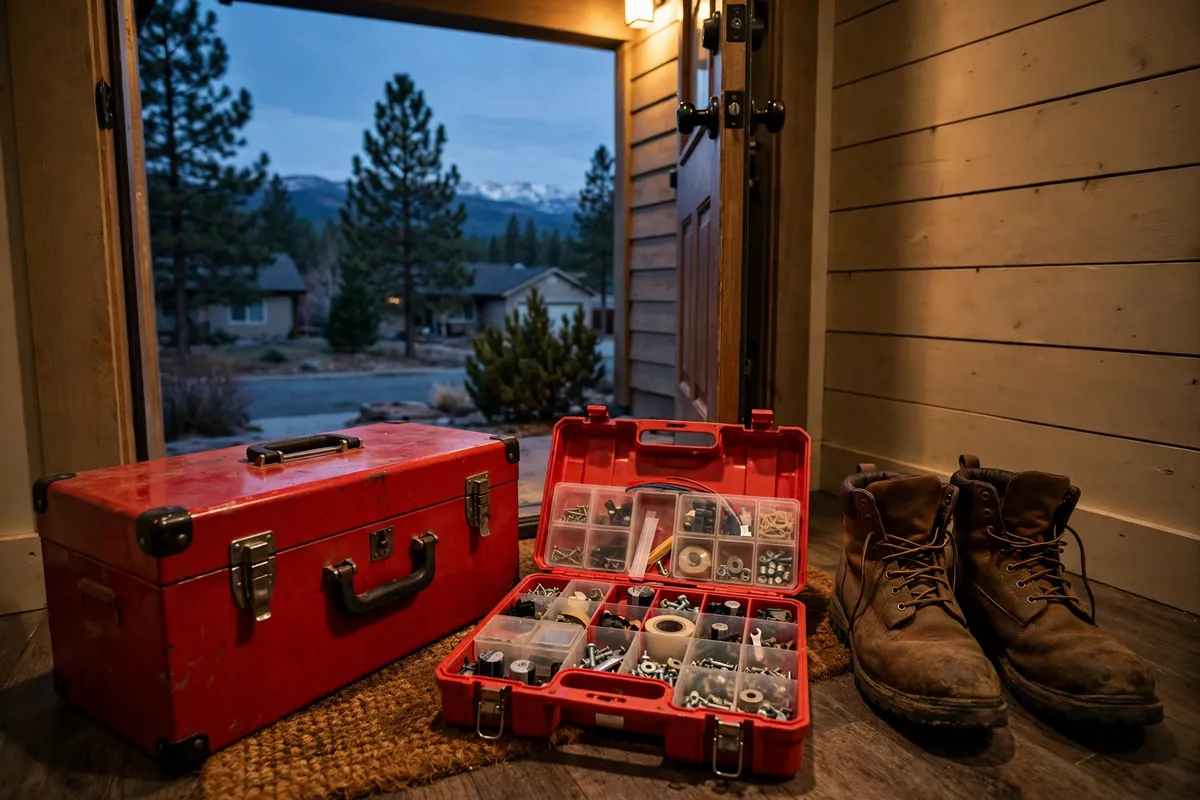
Every oven repair Bend OR visit starts with your description of the fault, followed by systematic diagnostic inspection. Our technician tests igniter current, element resistance, sensor accuracy, and electrical connections in a logical sequence isolating the malfunction. Gas components receive particular attention, with careful verification of valve operation, ignition timing, and combustion safety before replacement. After identifying the defective component, you receive a detailed written quotation covering replacement parts, labour, and the ninety-day warranty. Work begins only after your approval, and a diagnostic fee applies, with the amount confirmed when you book.
Our technicians carry frequently needed components, including igniters, bake elements, temperature sensors, door seals, and burner assemblies. Unusual components sometimes require ordering from the manufacturer, and our technician explains delivery timing so you can plan accordingly. After fitting any component, the technician heats the oven to full temperature, verifying ignition, calibration, and even heat distribution. This thorough final testing confirms accurate temperature regulation, dependable ignition, and consistent performance across every cooking mode.
05 — Choose well
How to choose a oven repair bend or team in Bend
- Ask if the fault is gas or electric, and what part failed, so you understand the repair.
- Ask for the quote before any work starts, so you know the full cost upfront.
- Ask if the repair is worth it for the age of the oven, or if replacement makes more sense.
- Check they test the oven to full temperature after the fix, not just switch it on.
- Check they are local to Bend, not a distant call centre, so the technician knows the area.
- Ask whether the technician specializes in your oven type, gas or electric, and carries the correct replacement components.
- Check the technician tests the oven to full operating temperature afterward, verifying ignition, calibration, and even heating thoroughly.
06 — Bend climate
Bend's high-desert climate and your oven
Bend's cold winters mean ovens work hard for holiday meals, and weak igniters fail under that load. Dry air cracks oven door seals, and dust reaches burners and igniters in kitchens near open windows. We check seals, igniters, and sensors with Bend's seasons in mind. An oven fire starts fast — the NFPA cooking-fire tips show how to stop one before it spreads. Use a thermometer and the safe cooking temperatures chart so every roast is done all the way through.
Seasonal stresses to watch for
- Vacation homes present distinctive challenges for oven repair Bend OR technicians encounter, since appliances idle unused for extended periods.
- Gas valves stiffen during long idle periods, igniters accumulate dust and moisture, and electronic controls drift out of calibration.
- Freezing garages impair ignition reliability, while high elevation alters the fuel-to-air mixture and flame characteristics. Technicians account for these regional factors on every visit.
Central Oregon's high-desert climate shapes oven repair Bend OR households need, with dry air and temperature swings accelerating deterioration. Cold winter mornings demand immediate oven performance, and weak igniters frequently fail under the sudden load of holiday roasting. Fine dust infiltrates kitchens through open windows during summer, settling on igniters, burner assemblies, and electronic control components. Wildfire smoke deposits microscopic residue on sensitive ignition components, gradually impairing spark generation and flame detection reliability. Repeated thermal expansion and contraction through freezing winters and hot summers gradually loosens electrical connections inside the control panel.

What Bend neighbours say
We collect reviews from real customers after every visit and publish them with their permission. No review appears here until it is real and verified — all stats to be confirmed before going live. The live site describes the business as family-owned since 2014, licensed, insured, and 5-star rated on Google.
07 — FAQs
oven repair bend or — frequently asked questions
Short, direct answers, each starting with the point, so it works for readers and for AI answers too.
Most oven and range repairs in Bend cost $150–$450, and a replacement runs $600–$2,500. Both figures come from the business's own cost guide on bendorappliancerepair.com, checked 2026-11-08. We diagnose first and give a clear quote before work starts.
The oven igniter is the usual cause, as burners use a different ignition path. A weak igniter glows but cannot open the gas valve, so we test the igniter current.
For an igniter, element, or sensor on an oven under 12 years old, repair usually wins. For a control or gas valve fault on an older oven, replacement is often better.
A faulty temperature sensor or a worn door seal is the common cause, so test with an oven thermometer. If the gap is large, the sensor needs testing.
Leave the house at once, and do not switch lights or phones on or off inside. Call the gas company from outside, and do not use the oven until it is cleared.
A weak bake element or igniter is the usual cause, as the oven heats slowly and cannot hold temperature. We test the element, igniter, and sensor.
A burning smell usually comes from food residue or grease baked onto interior surfaces, especially after roasting. Spills carbonize gradually during repeated heating cycles, producing odours whenever the oven reaches high temperatures. Clean interior surfaces thoroughly with an appropriate cleaner, and remove debris from the oven floor before cooking again. If the smell persists after cleaning, the insulation or an electrical component may need professional inspection.
Yes, a weak igniter wastes gas considerably, because it glows without opening the gas valve promptly during ignition attempts. Repeated failed ignition cycles release unburned gas into the oven cavity, creating odours and potential safety concerns. A technician tests igniter current draw and replaces the component when readings fall below manufacturer specifications. Prompt replacement restores efficient ignition, reduces gas consumption, and eliminates the safety risk entirely.
We also fix ovens across Central Oregon
The same team serves Redmond, Sisters, Sunriver, La Pine, and Bend neighbourhoods, so choose your area for local details.
Other services in Bend
Request a visit
Tell us the appliance and the symptom — we reply with a visit slot.
Need oven repair bend or?
Call (541) 422-4646 — Mon–Sat 8am–6pm. Tell us the fault, and we will book a visit and give you a clear quote before work starts.
Call (541) 422-4646