
Blog · Bend, Oregon · November 15, 2026
Why Is My Dishwasher Not Draining in Bend, OR?
You open the dishwasher and find an inch of dirty water at the bottom. A clogged filter or a blocked hose is usually the cause. Here are the safe checks, the repair costs, and when to call a tech in Bend.
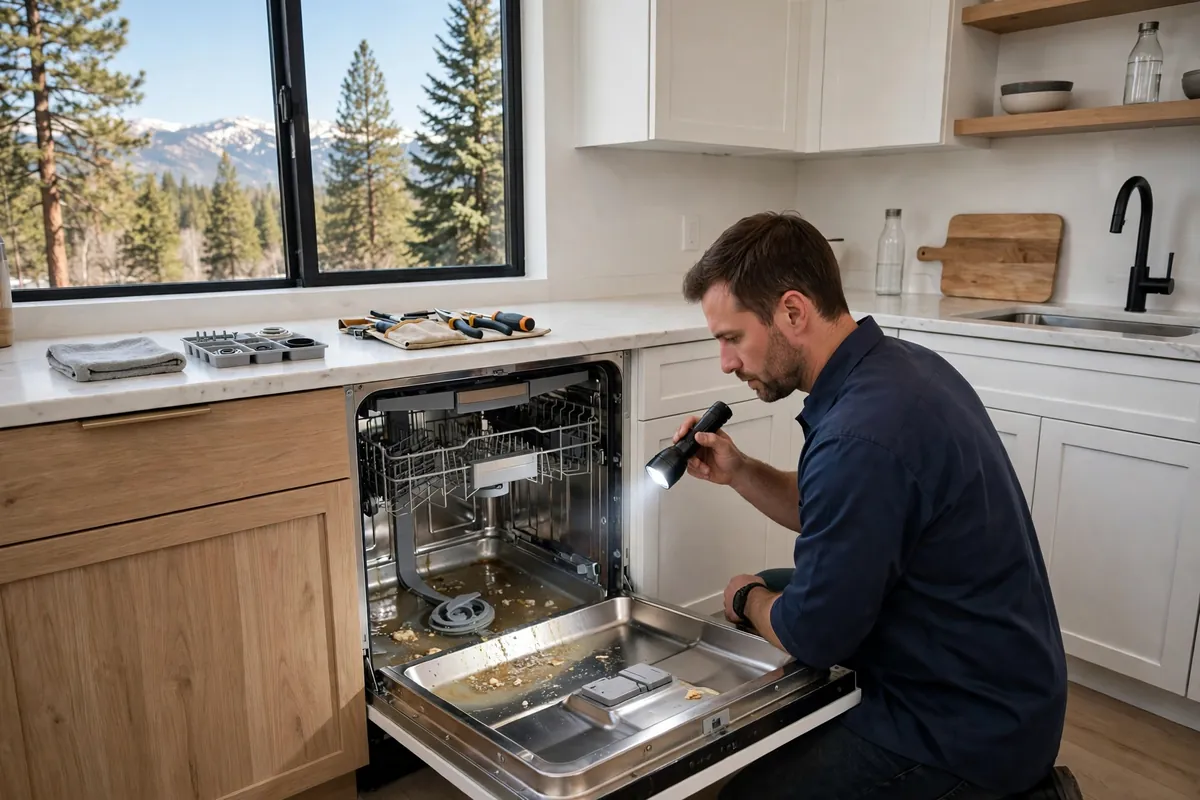
You open the dishwasher after a full cycle and find an inch of dirty water at the bottom. The dishes are still wet, and the water smells stale. Dishwasher not draining is one of the most common calls we take in Bend. The good news is that the cause is often simple. A clogged filter or a kinked hose is behind most cases we see. This guide walks you through the safe checks, the parts that fail, and the cost of a fix.
We are a family-owned repair team fixing dishwashers across Bend, Redmond, and Central Oregon since 2014. A dishwasher drains through a short path with five parts. The filter, the pump, the hose, the disposal, and the air gap all sit on that path. When one point clogs, the water stays in the tub. This guide follows that path, step by step, so you can find the fault fast.
Below are the short answer and the safe checks to try first. You will see the seven most common causes, and what each one looks like. You will also learn how the garbage disposal and the air gap fit in. You will find our own dishwasher repair prices and the 50% Rule for repair or replace. Dishwasher not draining after these checks means a part has failed. Call us and describe what your dishwasher does.
01 — Guide
The short answer: start with the filter
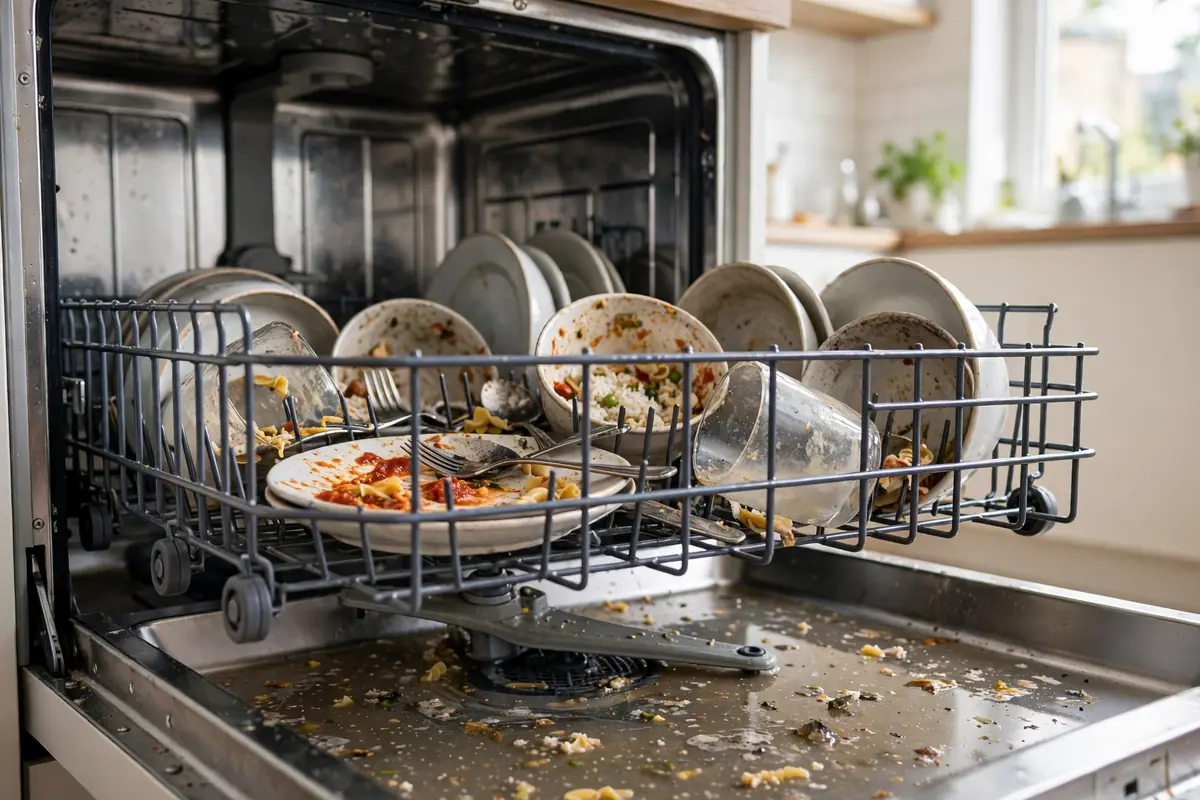
Most dishwashers that stop draining are clogged, not broken. Food, grease, and small bits of glass collect in the filter at the bottom of the tub. The filter is a mesh cup and screen that catches scraps before the water drains. When it fills up, water cannot pass through. The pump runs, but the tub stays full. Dishwasher not draining almost always starts here, and the fix takes two minutes.
A little water in the bottom can be normal, so check the level first. Most makers say one to two cups left after a cycle is fine. Dirty water that covers the floor of the tub is not normal. It means the drain path is blocked somewhere. Start with the filter, then the hose, then the disposal. Work in that order, and you will find most faults without tools.
02 — Guide
Safe checks you can do first
Cut the power before you reach into a dishwasher full of water. Switch the machine off, then flip its breaker or unplug it. Standing water and electricity do not mix. Bail the water out with a cup and a towel. That lets you see the filter and the drain opening. Keep a bucket nearby, since a full tub holds more water than it looks.
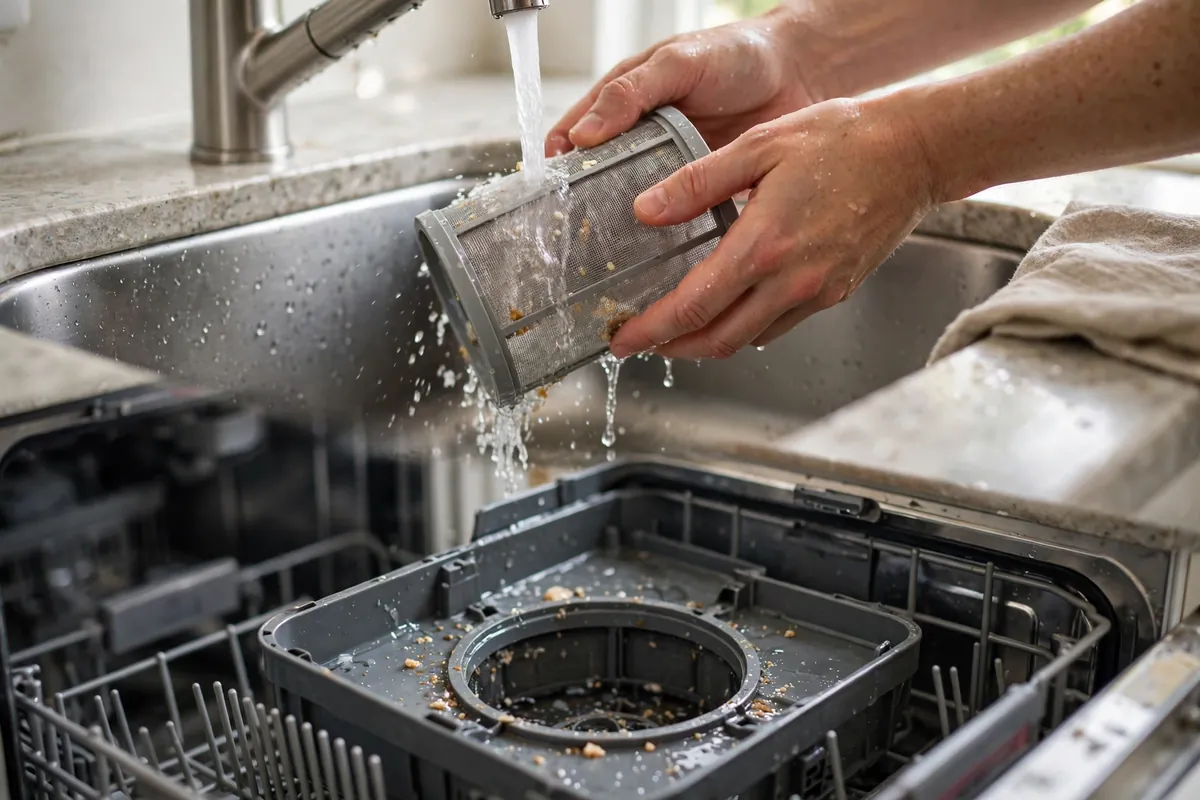
Pull out the lower rack and twist out the cylinder filter. Lift the flat mesh screen beside it. Rinse both under warm water and scrub them with a soft brush. Look for glass, labels, bones, and seeds around the drain opening. Remove anything you find with your fingers or tweezers. A clean filter fixes dishwasher not draining more often than any other single step.
Run the garbage disposal next, since the dishwasher drains through it in most Bend homes. Run cold water and switch the disposal on for thirty seconds. If the disposal is full or jammed, the dishwasher cannot drain. Then run a short rinse cycle and watch the tub. If the water drops, the job is done. If it stays, move on to the hose.
03 — Guide
The 7 most common causes of a dishwasher not draining
If the safe checks did not clear the water, one of seven causes is at fault. The table below lists them in the order we see them most in Bend homes. Four of the seven are clogs, and all four are cheap to fix. The other three are failed parts, and they need a technician with a meter to confirm. Dishwasher not draining rarely means a dead machine, and that is good news for your wallet.
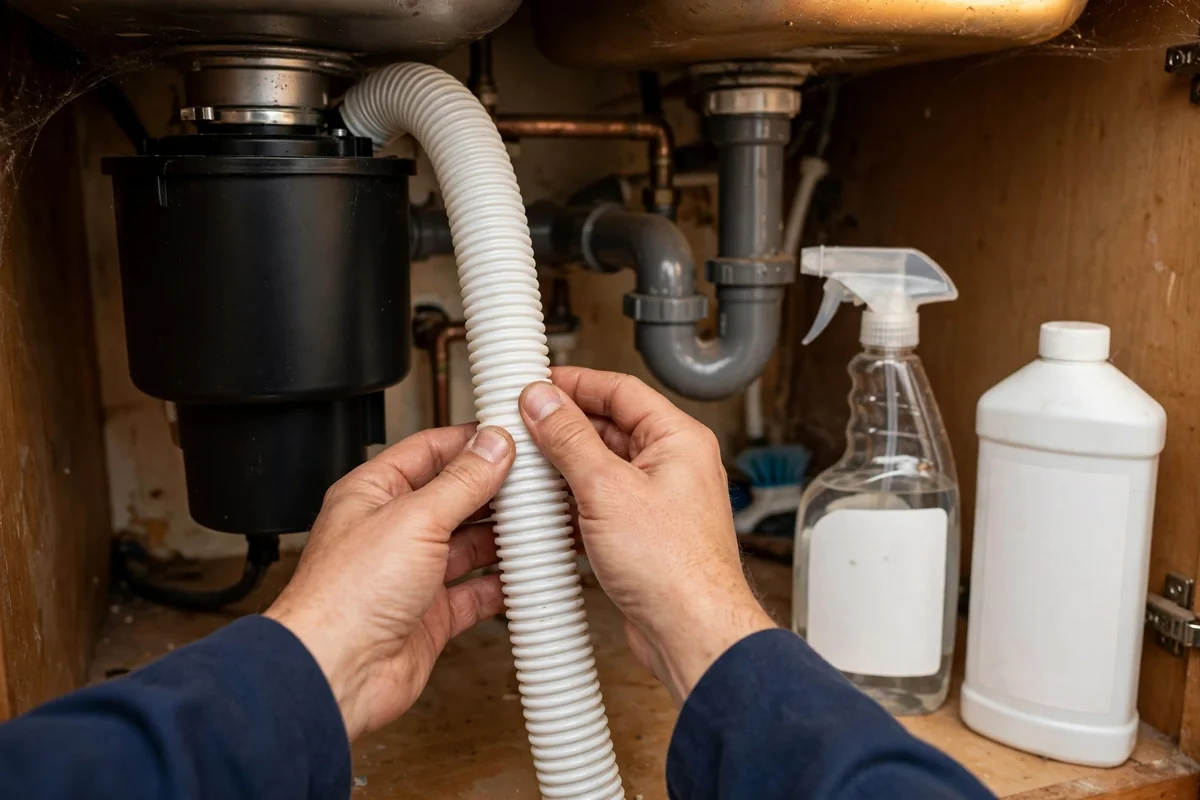
The drain hose deserves a closer look, because it hides behind the machine. It is a ribbed hose that runs from the back of the dishwasher to the sink drain. Heavy items under the sink can crush it, and a dishwasher pushed back too far can kink it. A kinked hose lets a little water through but never enough. Pull the machine out only if it moves easily, and check the hose for sharp bends. Straighten the hose and run a rinse cycle to test it.
The check valve is the other part to know about. It is a small flap that stops dirty water from flowing back into the tub. When it sticks shut, water cannot leave. When it sticks open, dirty water flows back in. A stuck valve needs a technician to test and replace. Do not pour drain cleaner into the dishwasher, since makers warn against it. It can damage seals and hoses, and it will not clear a stuck valve.
| Cause | Sign you will see | First check |
|---|---|---|
| Clogged filter | Water covers the tub floor after a cycle | Clean the filter and the sump |
| Blocked or kinked drain hose | Water drains slowly, or not at all | Straighten the hose, check for clogs |
| Garbage disposal connection | Dishwasher never drained after a new install | Run the disposal; check the knockout plug |
| Clogged air gap or missing high loop | Dirty water flows back into the tub | Clear the air gap cap |
| Failed drain pump | Humming sound, but no water moves | Technician tests the pump motor |
| Stuck check valve | Water stays, or dirty water returns | Technician tests and replaces the valve |
| Slow sink drain | Sink drains slowly and gurgles | Plumber clears the home drain line |
04 — Guide
The garbage disposal connection
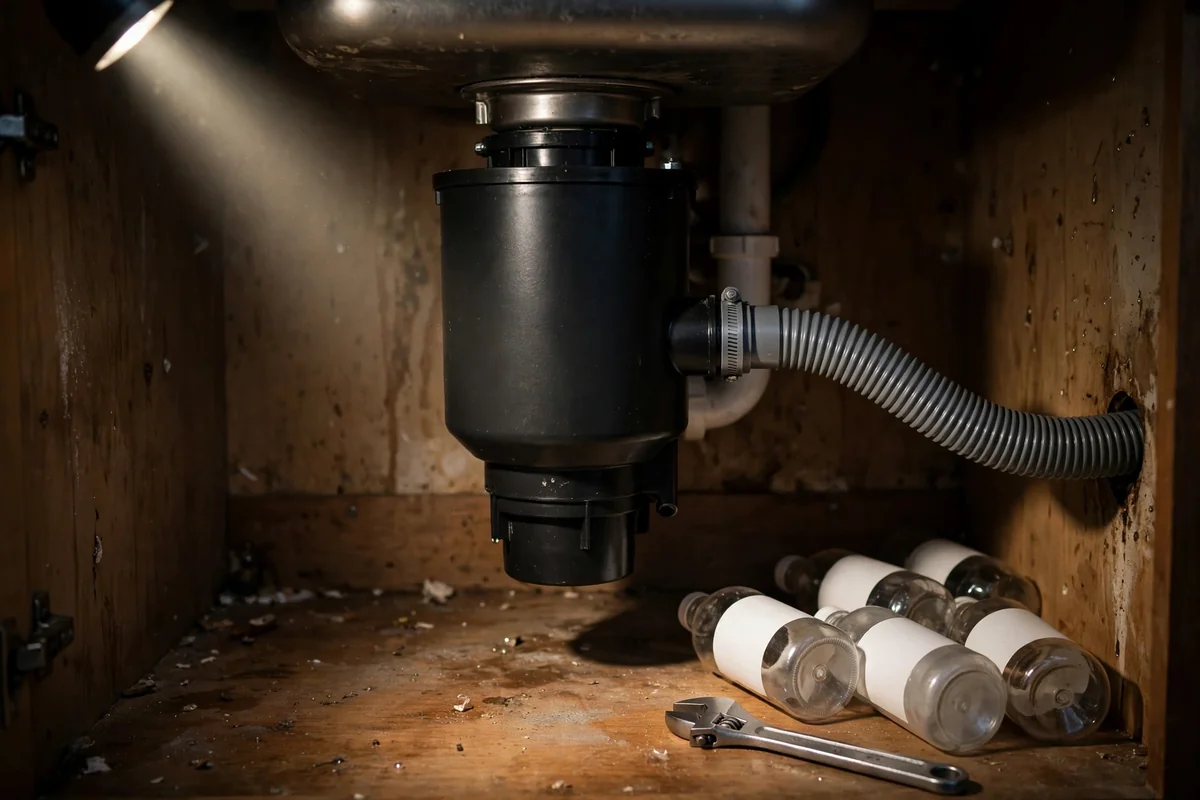
A new disposal or a new dishwasher is the classic trigger for this fault. The disposal has a small plastic plug in its dishwasher inlet, called a knockout plug. The installer must knock it out before connecting the hose. If the plug stays in place, water has nowhere to go. The dishwasher has never drained from day one. This is the first thing we check on a new install in Bend, and it takes minutes to fix.
A full disposal can cause the same fault on an older machine. Food waste fills the disposal and blocks the dishwasher hose inlet. Run the disposal with cold water before every dishwasher cycle. That keeps the path clear. If the disposal hums but does not spin, press its reset button on the bottom. If it still does not spin, switch it off and call a technician. Never reach into a disposal with your hand.
05 — Guide
Air gap and high loop: the backflow guard
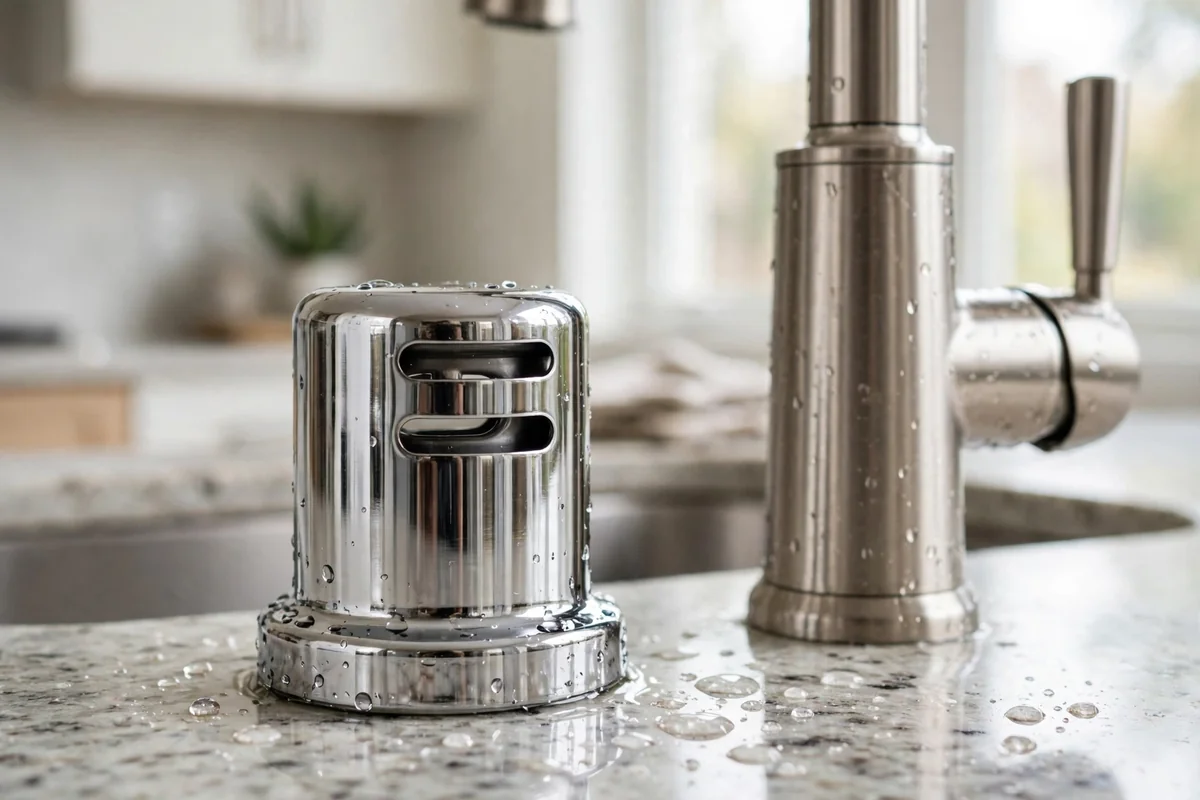
The air gap is a small chrome cap on the countertop beside your faucet. It stops dirty sink water from flowing back into the dishwasher. When it clogs, water backs up out of the cap or into the tub. Lift the cap and clear any debris you find. Run a short cycle and watch the cap. If water still comes out of it, the blockage sits further down the hose.
Homes without an air gap use a high loop instead. The drain hose loops up to the underside of the countertop before it drops to the drain. That loop must sit at least 32 inches above the floor. A hose that droops low lets dirty water flow back into the tub. Check the loop under the sink and refasten it high with a zip tie or a clamp. Makers list a missing high loop as a top cause of drain trouble after a new install.
06 — Guide
When the drain pump has failed
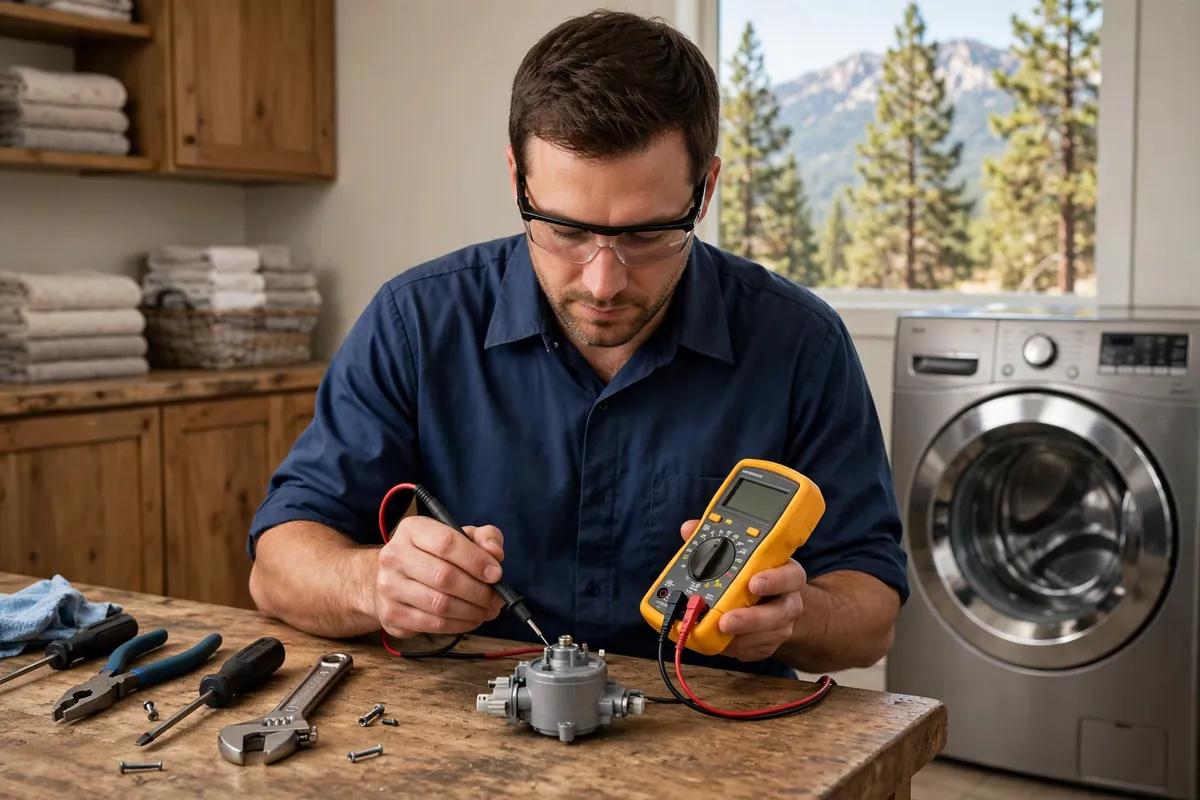
A failed drain pump is the most common part fault behind dishwasher not draining. The pump pushes water out of the tub and up the hose. When it fails, you may hear a hum with no water moving. You may also hear nothing at all. A jammed impeller can hum, while a burned motor stays silent. Either way, the water stays in the tub. Testing a pump needs a meter, so this is a technician job.
Bend's hard water plays a part here, especially in Redmond and La Pine. Scale builds up in the pump, the spray arms, and the drain path. It slows the water and wears the pump sooner. Homes on well water in Deschutes County see it most. Run a cleaning cycle in your dishwasher each month, and descale when you see white film on the racks. Small habits like these keep the pump alive longer.
Most dishwasher repairs in Bend cost $150–$400, including parts and labour, from our own cost guide. A drain pump sits in the middle of that range. The 50% Rule tells you when repair stops making sense. A new dishwasher runs $500–$1,800, so half of a basic new machine is about $250. A $200 pump repair on a six-year-old dishwasher is a clear win. A $400 control board on a 13-year-old dishwasher is a harder call. Tell us the age and the fault, and we will give you a straight answer. A diagnostic fee applies, and the amount is confirmed when you book.
| Dishwasher situation | Typical cost | Our honest advice |
|---|---|---|
| Dishwasher, 5 years old, clogged filter or hose | $150–$200 | Repair — small job, young machine |
| Dishwasher, 8 years old, failed drain pump | $150–$300 | Repair — well under half of new |
| Dishwasher, 12 years old, control board fault | $300–$400 | Borderline — compare with a new dishwasher |
| Dishwasher, 14 years old, tub or motor fault | $300–$400 | Replace — age plus a major part |
07 — Guide
When to call a technician in Bend
Call a technician when the safe checks did not clear the water. A failed pump, a stuck valve, or a control board fault needs a meter and the right part. Call us sooner if the dishwasher smells of burning, grinds, or leaks onto the floor. Those signs mean more damage is coming, and running the machine makes it worse. Switch it off and describe what happened when you call.
We serve Bend, Redmond, Sisters, Sunriver, and La Pine, and we fix all 29 brands on our list. You get an upfront flat-rate quote, so the number we agree is the number you pay. No hourly meter runs while you wait, and no surprise shows up on the bill. A dishwasher that will not drain is a fault we fix every week. Call us at (541) 422-4646 and tell us what the dishwasher does.

07 — FAQs
dishwasher not draining — frequently asked questions
Short, direct answers, each starting with the point, so it works for readers and for AI answers too.
A dishwasher that holds water with no blockage points to a failed part. A dead drain pump, a stuck check valve, or a silent control board can leave water in the tub. Clean the filter and check the hose first. If the water stays, call a technician to test the pump and the valve.
Most dishwasher repairs in Bend cost $150–$400, including parts and labour. A filter clean or hose fix sits at the low end, while a drain pump sits in the middle. A diagnostic fee applies, and the amount is confirmed when you book. We quote upfront before any work starts.
Switch the dishwasher off and cut the power at the breaker. Bail the standing water out with a cup and a towel. Then clean the filter and run the disposal clear. Run a short rinse cycle to test the drain. If the water stays, the fault is deeper, and a technician should look at the pump and the hose.
For a filter, a hose, or a pump, yes. Those jobs cost far less than a new dishwasher. For a control board or motor fault on a unit over 12 years old, replacement is often better. Dishwasher repair in Bend follows the 50% Rule. If the repair tops half the price of new, replace it.
Need a repair in Bend?
Our team fixes every appliance in this guide across Bend, Redmond, and Central Oregon. Pick your appliance for local details and a clear quote.
Want a clear quote for your appliance?
Call (541) 422-4646 — Mon–Sat 8am–6pm. Tell us the fault, and we will book a visit and give you a clear quote before work starts.