
Blog · Bend, Oregon · November 13, 2026
Why Is My Dryer Not Heating in Bend, OR?
Your dryer tumbles but the clothes come out cold and damp. A clogged vent or blown thermal fuse is usually the cause. Here are the safe checks, the repair costs, and when to call a tech in Bend.
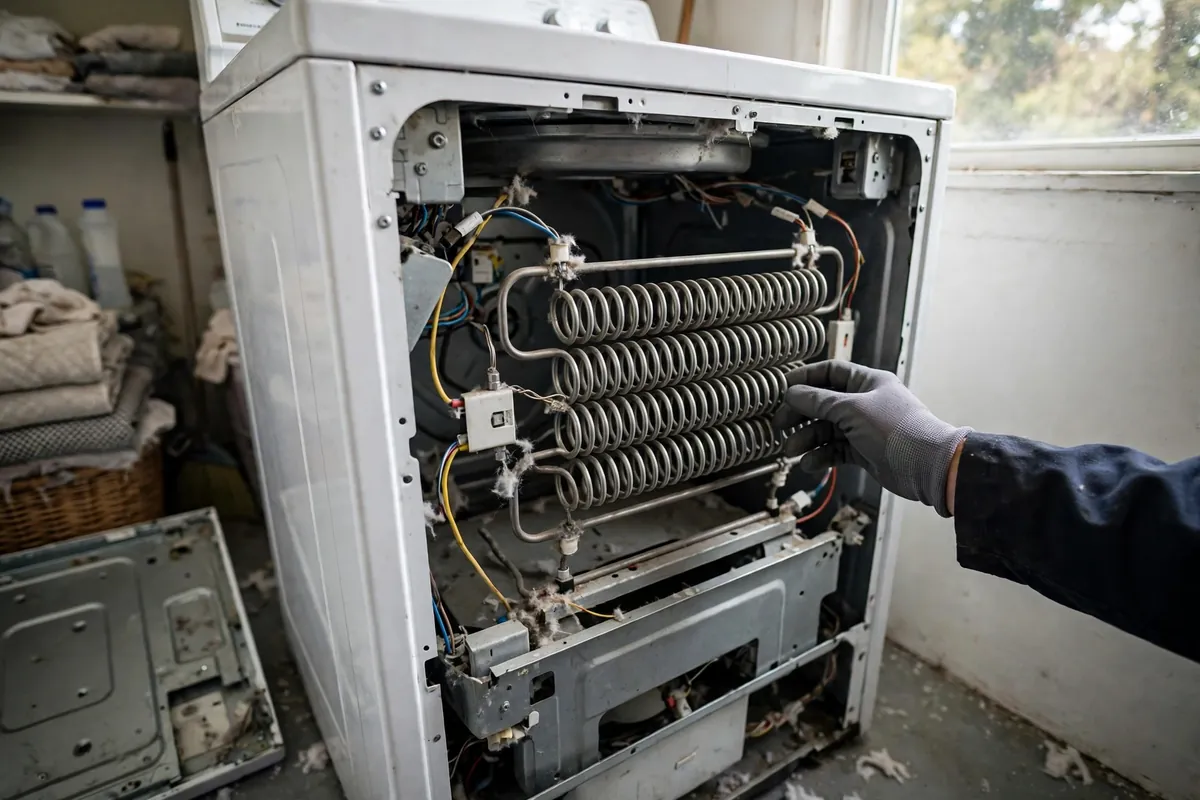
Your dryer tumbles, the timer runs down, and the clothes come out cold and damp. Dryer not heating is one of the most common calls we take in Bend. The good news is that the cause is often simple. A clogged vent or a lint filter is behind most no-heat dryers we see. This guide covers the safe checks, the parts that fail, and the cost of a fix in Bend.
We are a family-owned repair team fixing dryers across Bend, Redmond, and Central Oregon since 2014. Dryer not heating looks the same in every home, but the cause changes with the machine. Electric dryers and gas dryers fail in different ways, and this guide covers both. You will learn which checks are safe at home, and which jobs belong to a technician.
Below are the short answer and the five most common causes. You will see how electric and gas dryers differ, and how Bend's dusty high-desert air plays a part. You will also find our own dryer repair prices and the 50% Rule for repair or replace. If the checks below do not bring the heat back, call us and describe what your dryer does.
01 — Guide
The short answer: check airflow before you blame a part
Most dryers that stop heating are choking on lint, not broken inside. Hot air only dries clothes when it can move freely through the drum and out the vent. A clogged lint filter or a packed vent hose slows that air to a trickle. The dryer then overheats, and a safety device cuts the heat to protect your home. That is why dryer not heating so often starts with airflow, not a failed part.
Start with the lint filter, then the vent hose, then the vent hood outside. Those three checks take ten minutes and fix the problem more often than any part swap. If the heat comes back and stays back, the job is done. If the dryer heats for a few minutes and then goes cold again, a safety fuse has likely blown. That fuse is a symptom, and the vent is usually the cause behind it.
02 — Guide
Safe checks you can do first
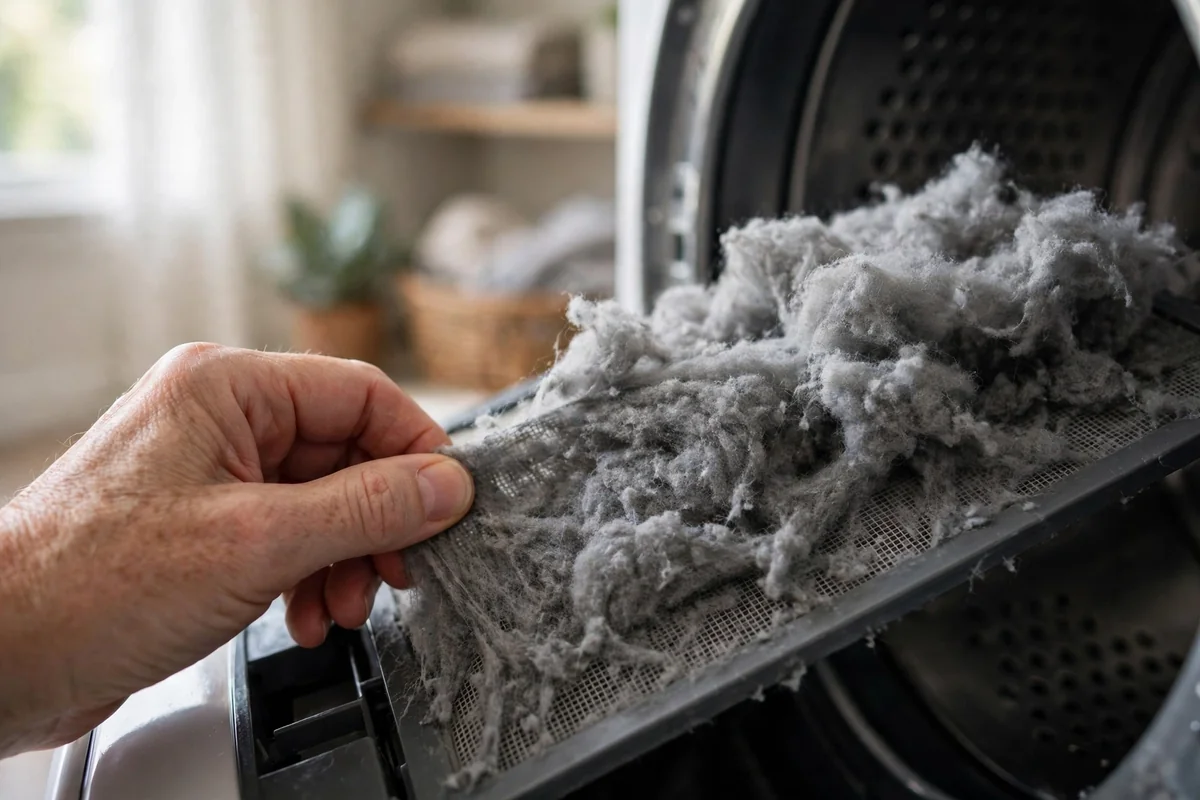
Clean the lint filter before every load, and wash it now if it feels waxy. Dryer sheets leave a film that blocks air even when the screen looks clean. Rinse the screen under warm water with a drop of dish soap, then let it dry fully. A clean screen is the cheapest fix for dryer not heating, and it costs nothing but a few minutes.
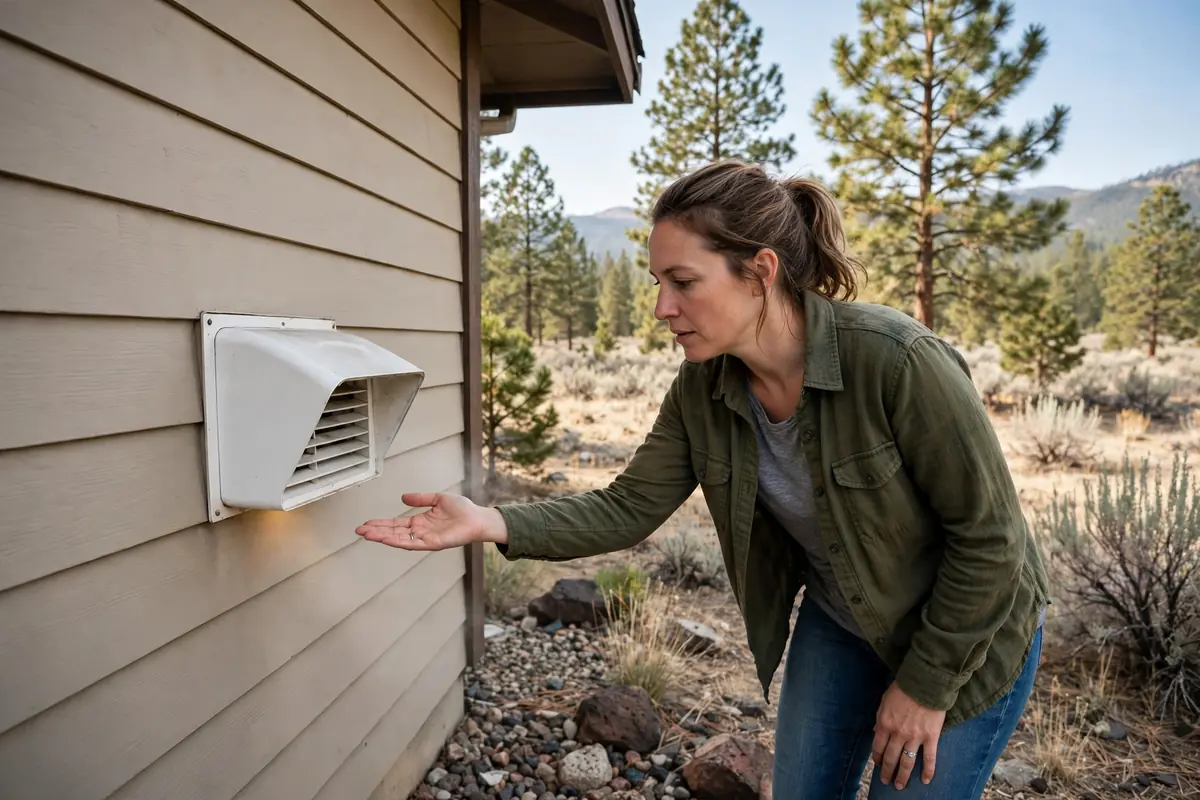
Check the cycle setting next, since Air Fluff and No Heat run the drum with no heat at all. Set the dryer to a timed dry on high heat and run it empty for five minutes. Then step outside and feel the vent hood. Strong, warm air should push the flap open within a minute. Weak or cold air means the vent is blocked somewhere between the dryer and the wall.
Electric dryers need 240 volts to heat, and the motor runs on half of that. If one side of the double breaker trips, the drum still spins while the heater gets no power. Find the double breaker for the dryer and flip it fully off, then back on. For gas dryers, check that the gas shut-off valve behind the machine is open. If you smell gas at any point, leave the house and call your gas company first.
03 — Guide
The 5 most common causes of a dryer not heating
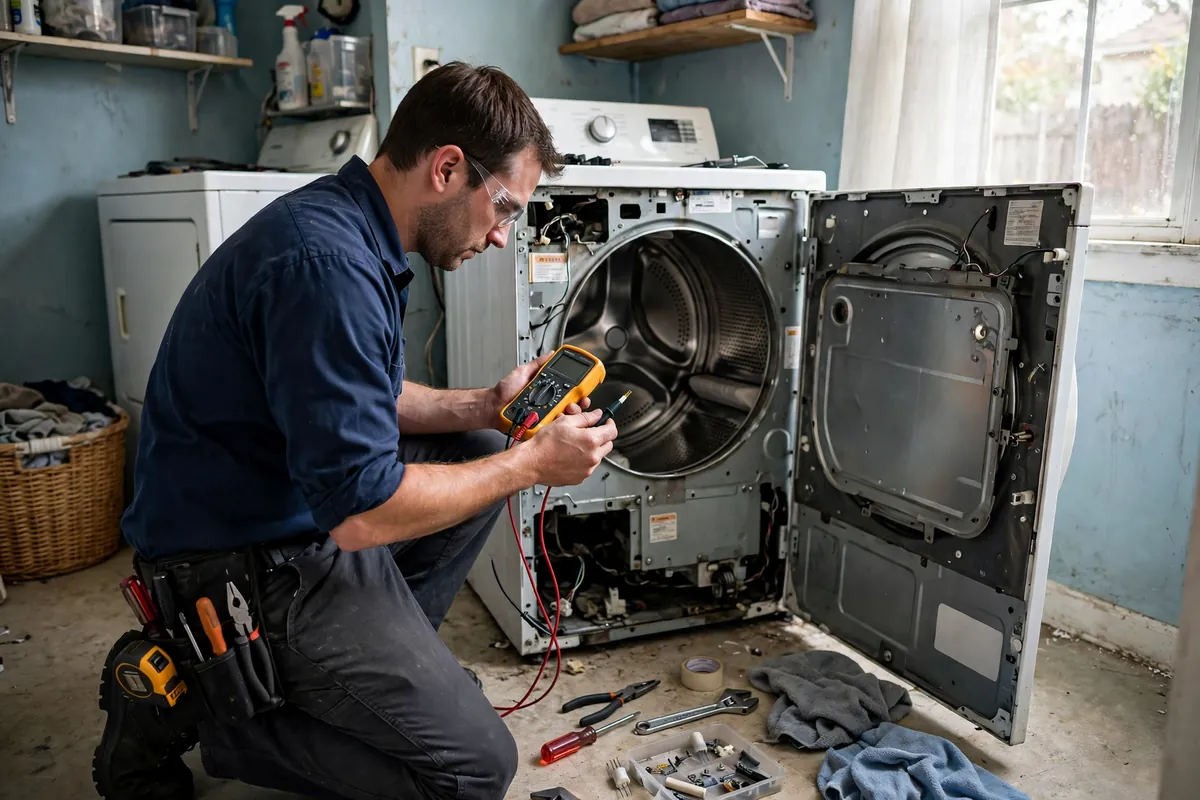
If the safe checks did not bring the heat back, one of five parts is at fault. The table below lists them in the order we see them most, with the first check for each. Two of the five are airflow problems in disguise, and both trace back to a vent that needs cleaning. The other three are failed parts, and they need a technician with a meter to confirm.
The thermal fuse deserves a closer look, because it confuses so many homeowners. It is a one-time safety device that blows when the dryer overheats, and it cannot reset itself. Once it blows, the drum keeps turning but the heat never comes back. A new fuse will blow again within a load or two if the vent stays clogged. Always clear the vent first. Never bypass or jumper a thermal fuse, since that removes the protection between an overheating dryer and a fire.
The heating element is the second part to know about, and it only exists in electric dryers. It is a metal coil that glows hot as air passes over it. Age or a broken coil ends the heat. A gas dryer has no element at all. It lights a small burner with an igniter. Weak gas valve coils can stop the flame even when the igniter glows.
| Cause | Sign you will see | First check |
|---|---|---|
| Clogged vent or lint filter | Dryer heats, then goes cold; clothes take 2–3 cycles | Clean the filter and the full vent run |
| Blown thermal fuse | Drum turns, no heat at all | Clear the vent first, then replace the fuse |
| Failed heating element (electric) | Drum turns, no heat at all | Technician tests the coil for continuity |
| Bad igniter or gas valve coils (gas) | Igniter glows but no flame, or no glow at all | Technician only — gas work is not DIY |
| Tripped breaker or bad thermostat | Dryer runs but never warms, or heats then stops | Reset the double breaker; test the thermostat |
04 — Guide
Electric vs gas dryers: what fails on each
Electric and gas dryers both dry clothes, but they make heat in different ways. An electric dryer heats with a metal coil, and it needs a full 240 volts to do it. A gas dryer burns gas in a small burner, lit by an igniter. Knowing your type tells you which parts can fail and which checks are safe at home.
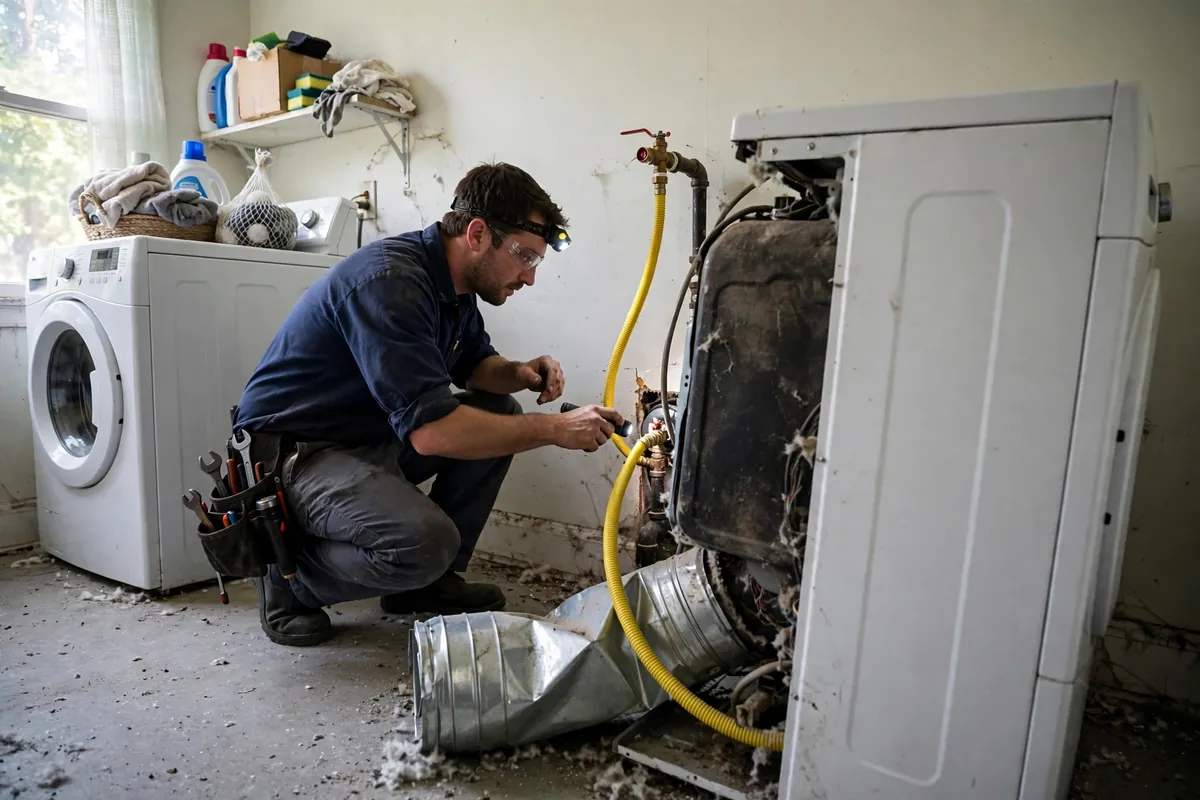
On an electric dryer, the order of checks is simple: vent, then thermal fuse, then heating element, then thermostats. Skip the gas parts entirely, since your machine has none. On a gas dryer, the order is vent, then thermal fuse, then thermostat. Anything past the fuse on the gas side belongs to a technician. Gas valves, igniters, and burners need proper tools and training. A wrong fix can leak gas into your home.
05 — Guide
Bend's high desert and your dryer
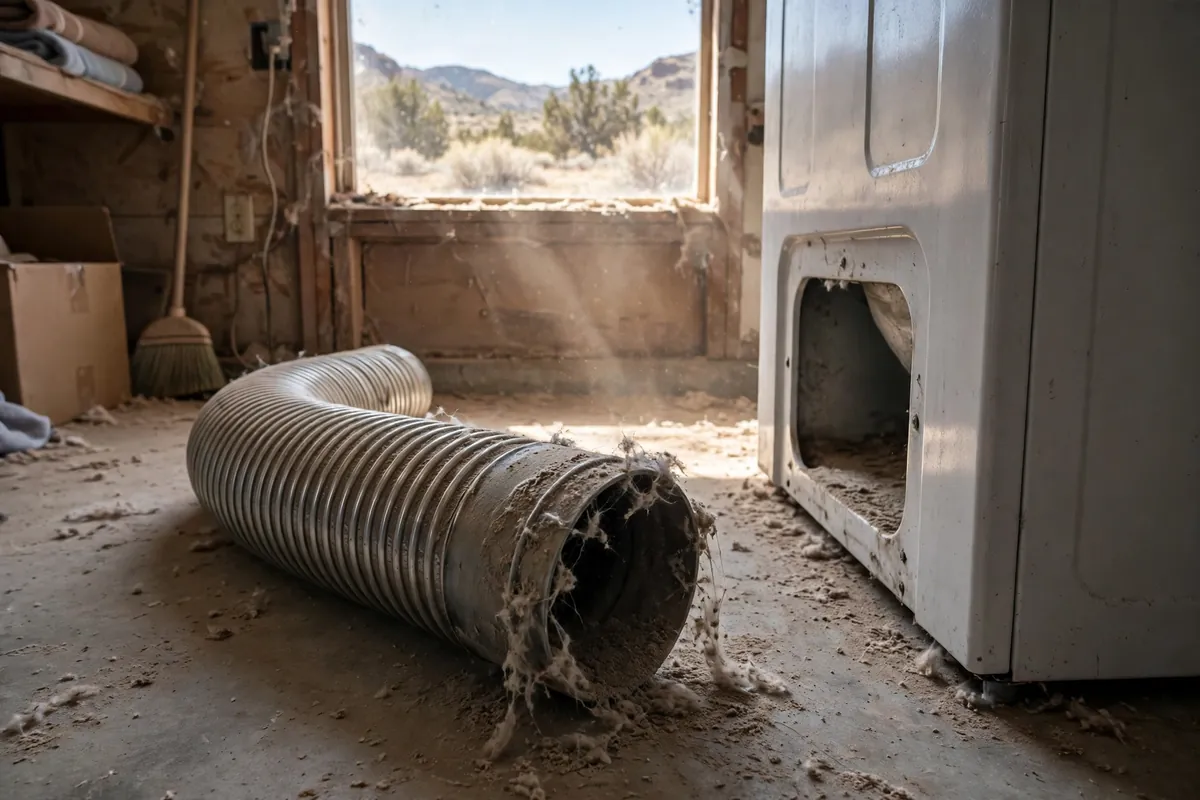
Bend's dry, dusty air shapes the dryer faults we see, and it starts with lint. Fine desert dust rides into the laundry room and mixes with lint on the screen and in the vent. The screen clogs faster here than in a damp coastal town, and a vent run fills sooner. Homes in Northwest Crossing and Larkspur often have long vent runs through the garage, where lint collects.
Winter adds a second strain for garage dryers in Bend, Redmond, and Sisters. Cold nights make a dryer work harder to reach heat. A long vent run to the outside wall loses warmth along the way. Summer brings the opposite problem, since a hot garage makes the dryer overheat and trip its safety fuse. A yearly vent clean fits Bend's climate and stops most no-heat calls.
Dust also settles on the moisture sensor bars inside the drum, and a coated sensor misreads damp clothes. The dryer then stops early or runs long, and the clothes feel wrong either way. Wipe the two metal sensor bars with a damp cloth when you clean the filter. It takes a minute and keeps auto-dry honest.
06 — Guide
What does dryer repair cost in Bend, OR?
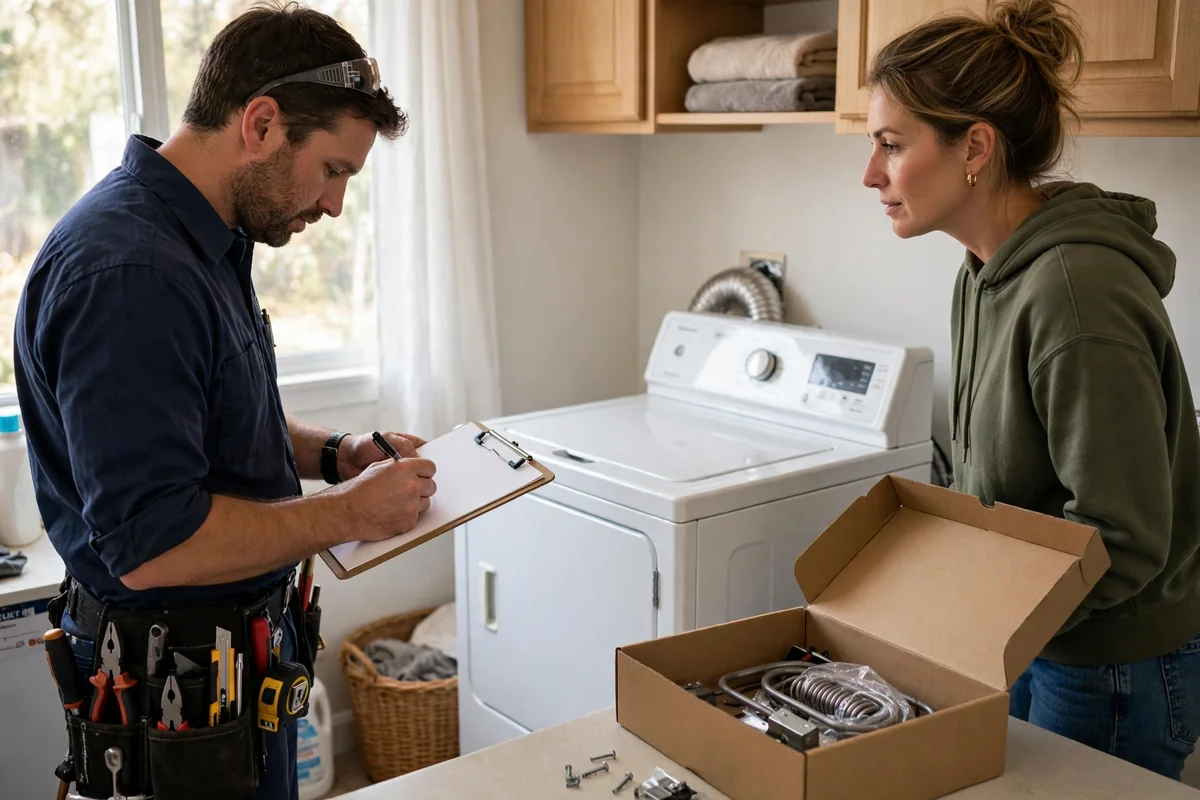
Most dryer repairs in Bend cost $100–$350, including parts and labour, from our own cost guide. A thermal fuse or vent clean sits at the low end. A heating element or control board sits higher, since the part costs more. A diagnostic fee applies, and the amount is confirmed when you book. You learn the cause and the price before you spend anything on the fix.
The 50% Rule tells you when repair stops making sense for a dryer. A new dryer in Bend runs $500–$1,500, so half of a basic new dryer is about $250. A $150 fuse repair on a five-year-old dryer is a clear win. A $350 motor repair on a 12-year-old dryer is a harder call. More parts may fail soon. Tell us the age and the fault, and we will give you a straight answer.
| Dryer situation | Typical cost | Our honest advice |
|---|---|---|
| Dryer, 5 years old, blown thermal fuse | $100–$200 | Repair — small part, young machine |
| Dryer, 8 years old, failed heating element | $150–$300 | Repair — well under half of new |
| Dryer, 12 years old, dead motor | $300–$350 | Borderline — compare with a new dryer |
| Dryer, 14 years old, control board fault | $300–$350 | Replace — age plus a major part |
07 — Guide
When to call a technician in Bend
Call a technician when the safe checks did not bring the heat back. A blown fuse, a dead element, or a weak gas coil needs a meter and the right part. Call us sooner if the dryer smells of burning, grinds, or blows the fuse twice. Those signs mean more damage is coming, and running the machine makes it worse. Switch it off and describe what happened when you call.
We serve Bend, Redmond, Sisters, Sunriver, and La Pine, and we fix all 29 brands on our list. You get an upfront flat-rate quote, so the number we agree is the number you pay. No hourly meter runs while you wait, and no surprise shows up on the bill. If your dryer is not heating, call us at (541) 422-4646 and tell us what the dryer does.
07 — FAQs
dryer not heating — frequently asked questions
Short, direct answers, each starting with the point, so it works for readers and for AI answers too.
The drum and the heater run on separate circuits. A clogged vent, a blown thermal fuse, or a failed heating element can stop the heat. The drum keeps turning. Clean the lint filter and the vent first, then check the breaker.
Most dryer repairs in Bend cost $100–$350, including parts and labour. A fuse or vent clean sits at the low end, while a heating element or motor sits higher. A diagnostic fee applies, and the amount is confirmed when you book. We quote upfront before any work starts.
Yes. A clogged vent is the most common cause of a dryer that stops heating. Restricted airflow makes the dryer overheat, and the thermal fuse blows to protect your home. Clean the full vent run each year, and clear the lint filter after every load.
For a fuse, a belt, or a vent clean, yes. Those jobs cost far less than a new dryer. For a motor or control board fault on a unit over 12 years old, replacement is often better. Dryer repair in Bend follows the 50% Rule. If the repair tops half the price of new, replace it.
Need a repair in Bend?
Our team fixes every appliance in this guide across Bend, Redmond, and Central Oregon. Pick your appliance for local details and a clear quote.
Want a clear quote for your appliance?
Call (541) 422-4646 — Mon–Sat 8am–6pm. Tell us the fault, and we will book a visit and give you a clear quote before work starts.