
Blog · Bend, Oregon · November 14, 2026
Why Is My Refrigerator Not Cooling in Bend, OR?
Your freezer is cold but the fridge is warm. A blocked vent or failed fan is usually the cause. Here are the safe checks, the repair costs, and when to call a tech in Bend.
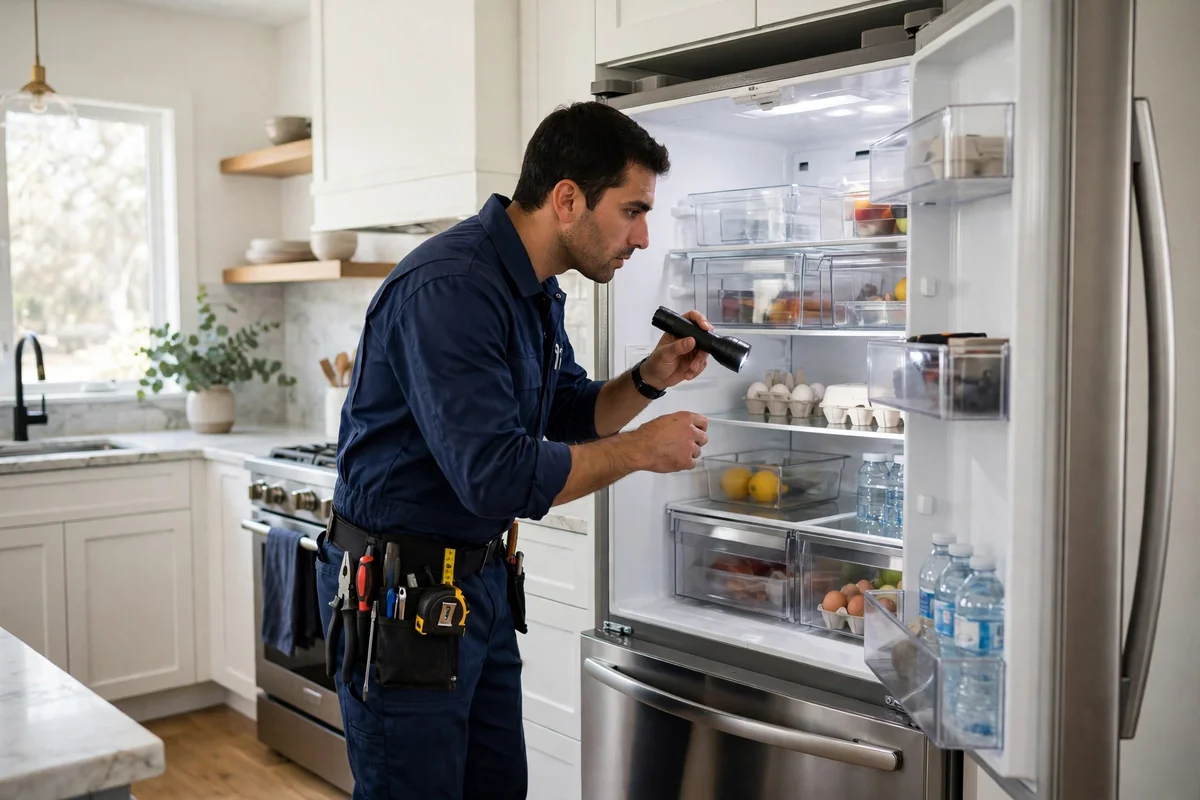
You open the fridge and the milk feels warm. The freezer below is still solid, and the ice cream is hard as a rock. Refrigerator not cooling is one of the most confusing faults a homeowner can face. The machine is clearly running, yet the fresh food warms up. This guide explains why it happens. It covers the safe checks you can do at home. It also explains when a technician is the right call in Bend.
We are a family-owned repair team fixing fridges across Bend, Redmond, and Central Oregon since 2014. Most fridges make their cold air in one place only, and that place is the freezer. A fan then pushes that cold air into the fridge through a vent. When that path breaks, the freezer stays cold while the fridge slowly warms. This guide follows that path, step by step, so you can find the fault fast.
Below are the short answer and the safe checks to try first. You will see the seven most common causes, and what a warm fridge with a cold freezer tells you. You will also learn how Bend's dusty high-desert air plays a part, and what a fridge repair costs here. Refrigerator not cooling after these checks means a part has failed. Call us and describe what your fridge does.
01 — Guide
The short answer: your freezer makes the cold air
Most fridges have only one source of cold air, and it lives in the freezer. A single evaporator coil sits behind the freezer's back panel. It makes all the cold air for both sections. An evaporator fan then blows that air into the fridge through a vent and a damper. The damper is a small flap that opens and closes to control the flow. When that shared path works, both sections stay cold. When it breaks, the freezer keeps its cold air while the fridge slowly warms toward room temperature. Refrigerator not cooling almost always starts on that path, not at the compressor.
That split is the key to the whole fault. A cold freezer with a warm fridge means the cooling system still works. The compressor runs, the coil gets cold, and the freezer holds its food firm. The problem is delivery, not production. Something is blocking the air, the fan has stopped, or the damper is stuck shut. That is good news, since most of those faults cost far less than a compressor.

02 — Guide
Safe checks you can do first
Start with the temperature settings, since a bumped dial is the simplest cause of all. Your fridge should sit at 40°F or below, and your freezer at 0°F. A dial can shift when a tall bottle slides against it, or when a child turns it by hand. Set the fridge dial to the middle setting, wait 24 hours, and check again with a thermometer. A fridge thermometer on the middle shelf gives a true reading, since the door shelf runs warmer.
Refrigerator not cooling often starts with a blocked vent, so check the vents next. The vents sit on the back wall of the fridge, and food boxes can cover them without you noticing. Move tall items away from the vents, and leave a gap of a few inches. Then check the door seal. Close the door on a dollar bill and pull it gently. If the bill slides out with no drag, the seal is letting warm air in. Wipe the seal clean, and check it again. A worn seal needs a technician to replace.
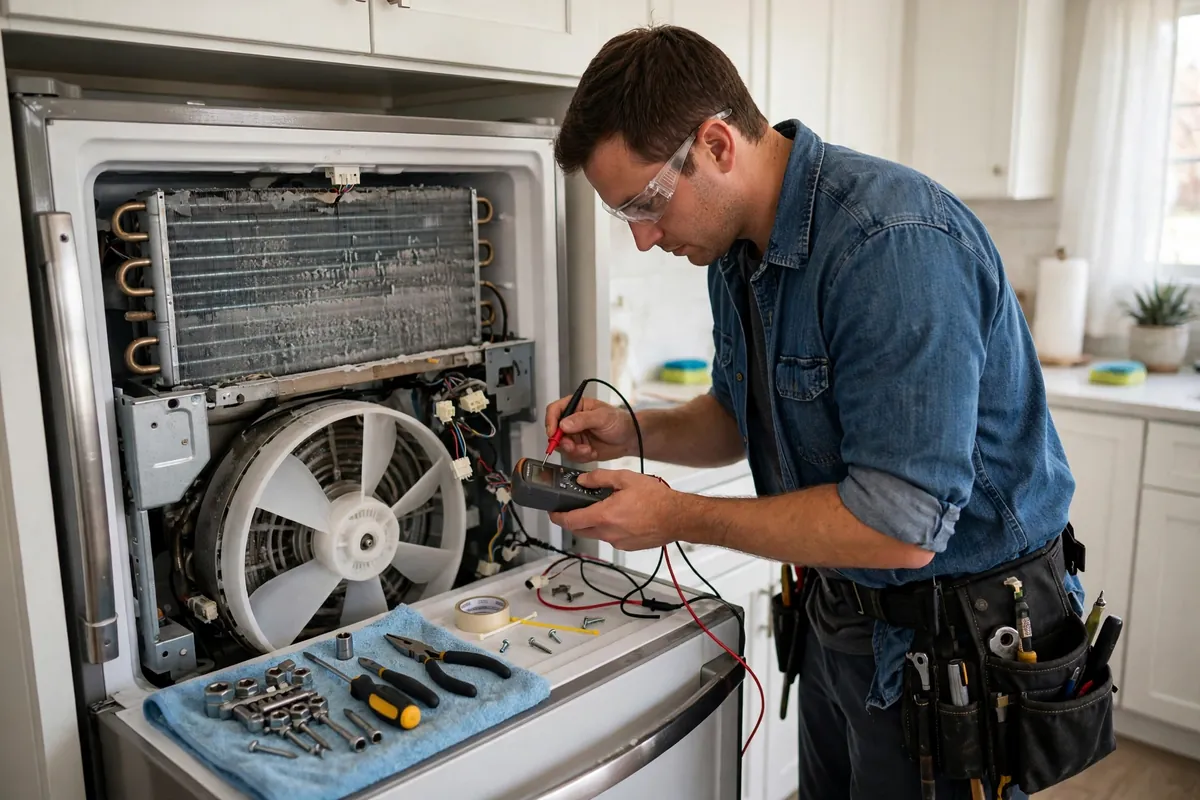
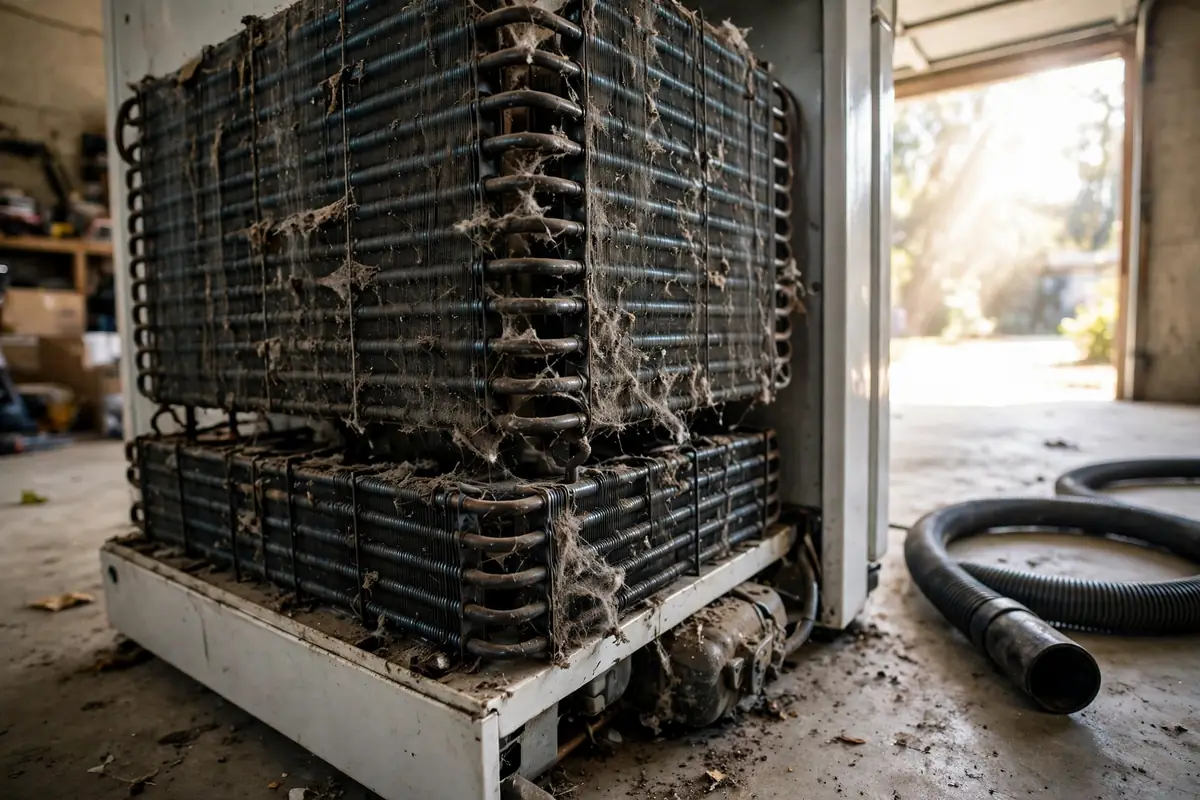
Listen for the fan, and feel for air. Open the freezer door and press the door switch with your finger. You should hear the evaporator fan hum, and feel cold air move. Silence means the fan has stopped, or ice has frozen it in place. Check the back of the fridge too. Pull the machine out a few inches and feel the coils at the back or below. Thick dust on the coils makes the whole fridge run hot. Vacuum them gently with a brush head, and give the fridge a day to recover.

03 — Guide
The 7 most common causes of a fridge not cooling
If the safe checks did not bring the cold back, one of seven parts is at fault. The table below lists them in the order we see them most in Bend homes. Three of the seven are airflow faults. All three trace back to the path between the freezer and the fridge. The other four are failed parts, and they need a technician with a meter to confirm. Refrigerator not cooling rarely means a dead compressor, and that is good news for your wallet.
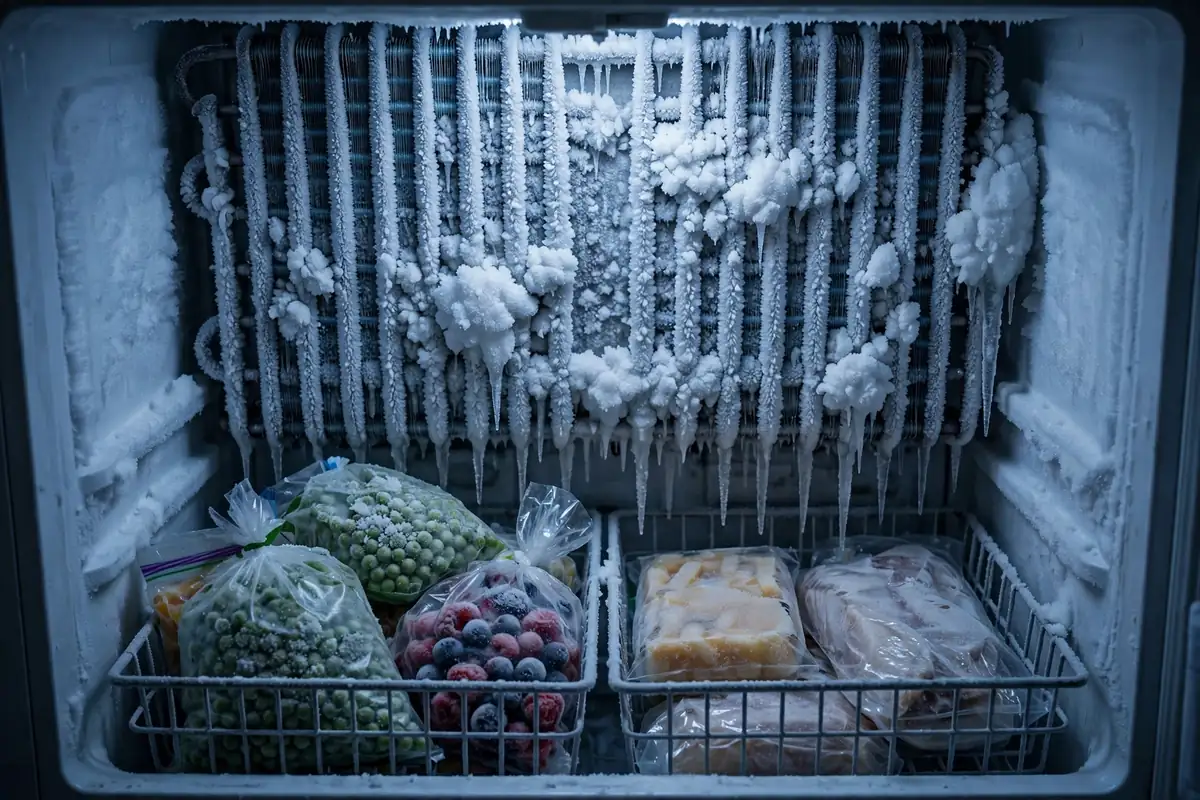
The defrost system deserves a closer look, because it confuses so many homeowners. A fridge defrosts itself on a timer, melting frost off the evaporator coil with a small heater. The melt water drains away through a tube. When the heater, the thermostat, or the timer fails, frost builds up. It chokes the coil and blocks the air. A manual defrost can bring the cold back for a week or two, but the frost returns. A failed defrost part needs a technician to replace.
The damper is the other part to know about. It is a motorised flap that opens to let cold air from the freezer into the fridge. When it sticks shut, the freezer stays cold and the fridge warms up. You may hear the fan run, yet feel no air at the fridge vents. The damper sits behind a cover at the top of the fridge. Testing and replacing it is a technician job.
| Cause | Sign you will see | First check |
|---|---|---|
| Blocked air vent | Fridge warms, freezer stays cold | Move food away from the vents |
| Failed evaporator fan | No air at the fridge vents, no fan hum | Listen at the freezer with the door switch pressed |
| Frosted evaporator coil (defrost fault) | Frost on the freezer back panel | Manual defrost, then call a tech if frost returns |
| Stuck air damper | Fan runs, but no air reaches the fridge | Technician tests the damper |
| Dirty condenser coils | Fridge runs constantly, feels warm at the back | Vacuum the coils gently |
| Worn door seal | Warm air leaks in, fridge runs all day | Dollar-bill test, wipe or replace the seal |
| Failed start relay or control board | Fridge clicks, or runs without cooling | Technician only — electrical testing needed |
04 — Guide
Fridge warm but freezer cold: what it means
A warm fridge with a cold freezer points to airflow, not to a dead cooling system. The compressor still runs, the coil still gets cold, and the freezer holds 0°F. The fault sits between the coil and the fridge. Work through the vent, the fan, and the damper in that order. Most faults on that path are cheap to fix, and a technician can confirm the cause in one visit.
Refrigerator not cooling in both sections points to the cooling system itself, not to airflow. Dirty condenser coils are the first suspect, since they make the compressor run hot. A failed start relay is next, since the compressor cannot start without it. A weak compressor or a sealed-system fault is the last suspect, and it is the most costly. If both sections are warm, move perishables to a cooler, and call a technician the same day.
05 — Guide
Bend's high desert and your fridge
Refrigerator not cooling in Bend often starts with dusty coils, not a broken part. Fine desert dust rides into kitchens and garages. It coats the condenser coils at the back or below the fridge. Dusty coils cannot shed heat, so the compressor runs longer and hotter. Homes in Northwest Crossing and Awbrey Butte often have fridges in garages, where dust collects fast. A coil clean twice a year fits Bend's climate and stops many no-cool calls.
Winter adds a second strain for garage fridges in Bend, Redmond, and Sisters. Cold nights can drop a garage below 36°F. A fridge in that cold may shut down and stop cooling. The freezer can thaw while the fridge warms. Summer brings the opposite problem, since a hot garage makes the fridge run non-stop. Keep a garage fridge in the shade, and check its temperature with a thermometer in both seasons.
Hard water is the other local factor, and it shows up in the ice maker. Scale builds up in water lines and valves, especially in Redmond and La Pine. The ice maker slows down, the cubes shrink, or the water tastes stale. Run a cleaning cycle on the ice maker each year, and change the water filter on time. If the ice maker stops but the fridge still cools, the fault is in the water line. It is not in the cooling system.
06 — Guide
What does refrigerator repair cost in Bend, OR?
Most refrigerator repairs in Bend cost $200–$500, including parts and labour, from our own cost guide. A fan, a damper, or a defrost part sits in the middle of that range. A compressor repair runs $300–$600 or more, which is why age matters so much for fridges. A diagnostic fee applies, and the amount is confirmed when you book. You learn the cause and the price before you spend anything on the fix. Refrigerator not cooling rarely needs a compressor, so most fixes land in that $200–$500 range.
The 50% Rule tells you when repair stops making sense for a fridge. A new fridge in Bend runs $800–$3,500, so half of a basic new fridge is about $400. A $250 fan repair on a six-year-old fridge is a clear win. A $500 compressor repair on a 13-year-old fridge is a harder call. More parts may fail soon. Tell us the age and the fault, and we will give you a straight answer.
| Fridge situation | Typical cost | Our honest advice |
|---|---|---|
| Fridge, 6 years old, failed evaporator fan | $200–$300 | Repair — small part, young machine |
| Fridge, 8 years old, stuck damper | $200–$300 | Repair — well under half of new |
| Fridge, 10 years old, defrost system fault | $200–$400 | Repair — unless other parts are failing too |
| Fridge, 13 years old, compressor fault | $300–$600+ | Replace — age plus a major part |
07 — Guide
When to call a technician in Bend
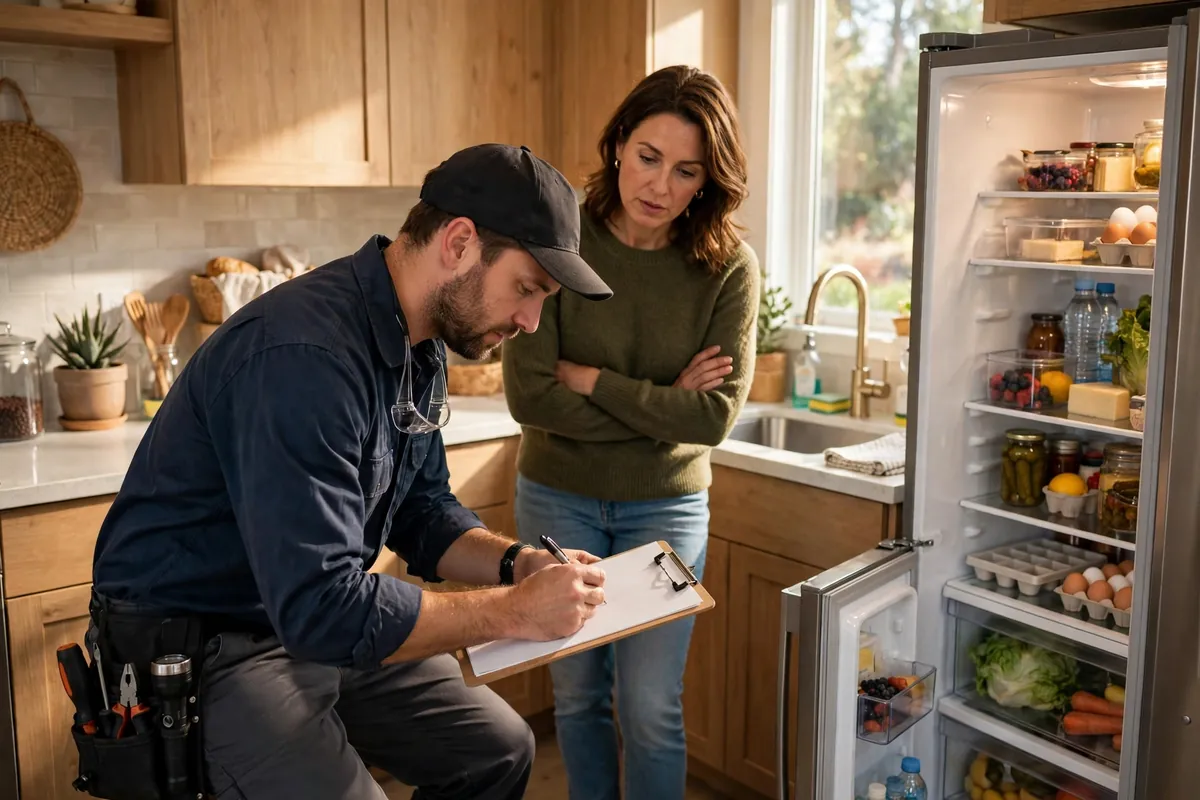
Call a technician when the safe checks did not bring the cold back. A failed fan, a stuck damper, or a defrost fault needs a meter and the right part. Call us sooner if the fridge clicks and never starts, or if it runs constantly without cooling. Those signs mean more damage is coming, and running the machine makes it worse. Move perishables to a cooler if the fridge reads above 40°F. Food above that temperature is not safe to keep.
We serve Bend, Redmond, Sisters, Sunriver, and La Pine, and we fix all 29 brands on our list. You get an upfront flat-rate quote, so the number we agree is the number you pay. No hourly meter runs while you wait, and no surprise shows up on the bill. Refrigerator not cooling is a fault we fix every week. Call us at (541) 422-4646 and tell us what the fridge does.
07 — FAQs
refrigerator not cooling — frequently asked questions
Short, direct answers, each starting with the point, so it works for readers and for AI answers too.
The freezer makes the cold air. A fan pushes it into the fridge through a vent and a damper. When that path breaks, the freezer stays cold while the fridge warms. A blocked vent, a failed fan, ice on the coil, or a stuck damper is usually the cause. Check the vents and the temperature setting first, then call a technician if the cold does not return.
Most refrigerator repairs in Bend cost $200–$500, including parts and labour. A fan or damper sits in that range, while a compressor repair runs $300–$600 or more. A diagnostic fee applies, and the amount is confirmed when you book. Refrigerator not cooling rarely needs a compressor, so most fixes land in the $200–$500 range. We quote upfront before any work starts.
Yes. Dusty coils cannot shed heat, so the compressor runs longer and hotter, and the fridge warms up. Bend's desert dust coats coils fast, especially on garage fridges. Vacuum the coils gently with a brush head twice a year, and give the fridge a day to recover. If the fridge still does not cool, call a technician.
For a fan, a damper, or a defrost part, yes. Those jobs cost far less than a new fridge. For a compressor fault on a unit over 12 years old, replacement is often better. Refrigerator repair in Bend follows the 50% Rule. If the repair tops half the price of new, replace it.
Need a repair in Bend?
Our team fixes every appliance in this guide across Bend, Redmond, and Central Oregon. Pick your appliance for local details and a clear quote.
Want a clear quote for your appliance?
Call (541) 422-4646 — Mon–Sat 8am–6pm. Tell us the fault, and we will book a visit and give you a clear quote before work starts.